 ChipApex | Global Electronic Components Supplier
SEARCH
Search Product
Search Post
— IC芯片 | 连接器 | 传感器 | 被动器件 —
Search productSearch post
— IC芯片 | 连接器 | 传感器 | 被动器件 —
Consult the customer manager about the wholesale price.
consultation hotline:86-132-6715-2157
email:[email protected]
Contact the product manager for consultation. One-stop consultation is available.
Do you want a lower wholesale price? Please send us your inquiry and we will reply immediately.
The Microsemi AFS600-2PQ208 is a Field Programmable Gate Array featuring 600,000 system gates and 13,824 tiles. It utilizes an advanced 130-nm, 7-layer metal flash-based CMOS process for nonvolatile configuration. The device supports a maximum system performance of 350 MHz with input frequencies ranging from 1.5 to 350 MHz and output frequencies from 0.75 to 350 MHz. It operates on a single 3.3 V power supply with an integrated 1.5 V regulator. The package is a Plastic Quad Flat Pack (PQ) with 208 leads at a 0.5 mm pitch. This specific variant includes the -2 speed grade, indicating performance 25% faster than standard, and carries the Y suffix for CRI patent license inclusion.
Verify the exact ordering code against official Microsemi documentation to confirm the presence of the -2 speed grade and PQ208 package. Ensure the Y suffix requirement for cryptography IP licensing is met if applicable. Confirm RoHS compliance status as standard packaging may vary by region. Check for engineering silicon or pre-production status if sourcing older batches.
Select this component when a high-density FPGA with integrated analog functions is required. The -2 speed grade offers higher performance than standard variants. Consider the PQ208 package constraints regarding pin count and thermal dissipation. Verify that the 3.3 V single-supply operation aligns with the target system power architecture.
This device belongs to the Fusion family of mixed-signal FPGAs, which integrates flash memory, analog blocks, and programmable logic. It shares architectural similarities with other Fusion devices like the AFS250 and AFS1500 but offers distinct gate counts and peripheral configurations. The PQ208 package is pin-compatible with other Fusion devices in the same family where available.
Direct replacements within the Fusion family include the AFS600-1PQ208Y for standard speed grade requirements. For higher density needs, consider the AFS1500 series. Cross-family migration to ProASIC3 or SmartFusion requires significant design adaptation due to architectural differences.


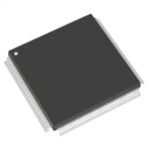 AFS600-2PQ208
The activity of extra discounts on wholesale prices is in full swing…
Please fill in your contact information and we will send you the latest wholesale price list.



