 ChipApex | Global Electronic Components Supplier
SEARCH
Search Product
Search Post
— IC芯片 | 连接器 | 传感器 | 被动器件 —
Search productSearch post
— IC芯片 | 连接器 | 传感器 | 被动器件 —
Consult the customer manager about the wholesale price.
consultation hotline:86-132-6715-2157
email:[email protected]
Contact the product manager for consultation. One-stop consultation is available.
Do you want a lower wholesale price? Please send us your inquiry and we will reply immediately.
The AGL030V2-QNG68 is a low-power flash FPGA from the IGLOO family, manufactured by Microsemi. It features 30,000 system gates and 768 VersaTiles (D-flip-flops). The device operates with a core voltage range of 1.2 V to 1.5 V and supports single-voltage system operation. It includes 1 kbit of FlashROM user nonvolatile memory but lacks embedded SRAM and integrated PLLs. The QN68 package provides 49 user I/Os in an 8x8 mm footprint. It supports Flash*Freeze technology for ultra-low power consumption while retaining design content.
Verify the specific ordering suffix to confirm temperature grade and packaging compliance. Ensure the design flow accounts for the absence of embedded RAM and PLLs inherent to the AGL030 device class. Confirm that the QN68 package dimensions align with the target PCB layout constraints.
Select this component when 30,000 system gates are sufficient for the logic requirements. Note that unlike higher-density devices, this part does not support embedded SRAM or Clock Conditioning Circuits with PLLs. It is suitable for designs prioritizing low pin count and small footprint over complex memory or clocking needs.
This device belongs to the IGLOO Low Power Flash FPGA family, which utilizes a 130-nm flash process. It is architecturally compatible with other IGLOO devices but differs in capacity and feature availability, specifically lacking the RAM and PLL resources found in larger packages within the same series.
For migration to lower densities, consider the AGL015, though it is not recommended for new designs. For higher capacity needs within the same package, verify pin compatibility with other devices supporting the QN68 form factor, ensuring functional differences like added RAM or PLLs do not conflict with the existing design.
No, the AGL015 and AGL030 devices do not support embedded SRAM or FIFO blocks.
The QN68 package provides 49 single-ended user I/Os.
Yes, if Flash*Freeze mode usage is not planned, the Flash*Freeze pin can be routed internally and used as a regular I/O.


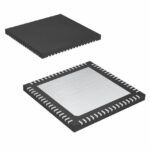 AGL030V2-QNG68
The activity of extra discounts on wholesale prices is in full swing…
Please fill in your contact information and we will send you the latest wholesale price list.



