 ChipApex | Global Electronic Components Supplier
SEARCH
Search Product
Search Post
— IC芯片 | 连接器 | 传感器 | 被动器件 —
Search productSearch post
— IC芯片 | 连接器 | 传感器 | 被动器件 —
Consult the customer manager about the wholesale price.
consultation hotline:86-132-6715-2157
email:[email protected]
Contact the product manager for consultation. One-stop consultation is available.
Do you want a lower wholesale price? Please send us your inquiry and we will reply immediately.
The AGL250V5-FGG144 is a commercial-grade IGLOO Low Power Flash FPGA manufactured by Microchip Technology. It utilizes a 130-nm flash process and provides 250,000 system gates with 6,144 VersaTiles. The device features 97 user I/Os in a 144-pin Fine Pitch Ball Grid Array (FGG144) package. It operates on a core voltage range of 1.425 V to 1.575 V. Key specifications include 36 kbits of embedded SRAM, support for AES-protected In-System Programming, and compatibility with mixed-voltage I/O standards up to 3.3 V.
Verify the specific ordering suffix 'V5' indicates the 1.5 V only supply voltage variant as per the datasheet nomenclature. Confirm the package type FGG144 corresponds to the Fine Pitch Ball Grid Array with 1.0 mm pitch. Ensure the temperature grade matches the commercial requirement of 0°C to +85°C junction temperature. Cross-reference the part number against the latest Microchip documentation to confirm current production status and any potential engineering change notices.
Select this component when a nonvolatile FPGA solution with instant-on capabilities is required. The 250,000 gate count suits moderate complexity logic designs. Verify that the 1.5 V core voltage constraint aligns with the system power budget. Consider the 97 available I/Os against interface requirements. Note that ARM-enabled variants exist but lack AES security features if encryption is needed.
This device belongs to the IGLOO family of low-power flash FPGAs from Microchip Technology. It shares architectural similarities with other members like the AGL125 and AGL400 but offers a specific balance of logic density and I/O count. The FG144 package is pin-compatible across several densities within the family, facilitating design migration strategies between different gate counts.
Direct pin-compatible replacements within the same package include the AGL125 series for lower density or the AGL400 series for higher density. Ensure functional equivalence regarding I/O standards and memory requirements when substituting. Verify that the target replacement maintains the necessary security features if AES-protected ISP is utilized in the design.
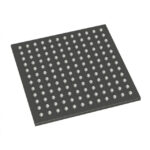 AGL250V5-FGG144
The activity of extra discounts on wholesale prices is in full swing…
Please fill in your contact information and we will send you the latest wholesale price list.






