 ChipApex | Global Electronic Components Supplier
SEARCH
Search Product
Search Post
— IC芯片 | 连接器 | 传感器 | 被动器件 —
Search productSearch post
— IC芯片 | 连接器 | 传感器 | 被动器件 —
Consult the customer manager about the wholesale price.
consultation hotline:86-132-6715-2157
email:[email protected]
Contact the product manager for consultation. One-stop consultation is available.
Do you want a lower wholesale price? Please send us your inquiry and we will reply immediately.
The Microchip Technology AGL600V2-FG144 is a flash-based Field Programmable Gate Array (FPGA) from the IGLOO V2 family. It features 600,000 system gates and 13,824 VersaTiles within a 144-pin Fine Pitch Ball Grid Array (FG144) package. The device operates on a core voltage ranging from 1.14 V to 1.575 V and supports up to 97 user I/Os. It includes 108 kbits of true dual-port SRAM and 1 kbit of FlashROM. Key specifications include a maximum operating frequency of 526.32 MHz at 1.5 V and 892.86 MHz at lower voltages, with an industrial temperature range availability.
Verify the specific suffix requirements for your application environment. The FG144 package designation indicates a Fine Pitch Ball Grid Array format. Confirm that the selected variant meets the necessary thermal and electrical standards for your target deployment scenario. Ensure compatibility with existing design tools and licensing models provided by the manufacturer.
Select this model when high logic density is required alongside nonvolatile storage capabilities. The AGL600V2 offers a balance of performance and power efficiency suitable for complex embedded logic. Consider the available I/O count and memory resources against your design constraints. Verify package dimensions and pinout compatibility during the initial hardware layout phase.
This component belongs to the IGLOO Low Power Flash FPGA family manufactured by Microchip Technology. The AGL600V2 represents a mid-range density option within the series, providing significant logic resources in a compact footprint. It utilizes a 130-nm flash process technology to deliver reprogrammability and security features integrated directly into the silicon architecture.
Direct replacements within the same package and functionality include other variants from the AGL600 or M1AGL600 series. Cross-family migration to higher density devices like the AGL1000 requires verification of pin compatibility and resource utilization. Always consult the official datasheet for detailed migration guidelines and electrical parameter comparisons.

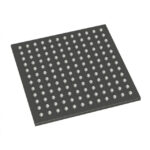 AGL600V2-FG144
The activity of extra discounts on wholesale prices is in full swing…
Please fill in your contact information and we will send you the latest wholesale price list.



