 ChipApex | Global Electronic Components Supplier
SEARCH
Search Product
Search Post
— IC芯片 | 连接器 | 传感器 | 被动器件 —
Search productSearch post
— IC芯片 | 连接器 | 传感器 | 被动器件 —
Consult the customer manager about the wholesale price.
consultation hotline:86-132-6715-2157
email:[email protected]
Contact the product manager for consultation. One-stop consultation is available.
Do you want a lower wholesale price? Please send us your inquiry and we will reply immediately.
The ALD810018SCLI is a quad Supercapacitor Auto Balancing (SAB) MOSFET array manufactured by Advanced Linear Devices. It integrates four N-channel enhancement-mode MOSFETs in a 16-pin SOIC package with an industrial temperature range of -40°C to +85°C. The device features a precision gate threshold voltage of 1.80V at 1µA drain-source current and a maximum drain-source breakdown voltage of 10.6V. It supports a continuous operating current of 80mA and a power dissipation of 500mW, designed for balancing up to four series-connected supercapacitors.
Verify the specific ordering suffix 'L' indicates lead-free compliance and 'I' confirms the industrial temperature range (-40°C to +85°C). Confirm the 16-pin SOIC package type matches the design requirements. Ensure static control procedures are followed during handling due to ESD sensitivity. Cross-reference the datasheet version to ensure alignment with current specifications.
Select this component for applications requiring automatic balancing of up to four series-connected supercapacitors within a single package. The industrial temperature rating makes it suitable for harsh environments. Consider the exponential current-voltage characteristic for precise balancing without external components. Verify that the 10.6V breakdown voltage aligns with the maximum cell voltage limits of the target supercapacitor stack.
This part belongs to the ALD8100xx family of Supercapacitor Auto Balancing MOSFET arrays. It shares core functionality with the dual-channel ALD910018 but provides four independent balancing channels. The device is designed to address voltage and leakage-current balancing issues inherent in series-connected supercapacitor stacks, preventing over-voltages through passive, self-regulating mechanisms.
ALD810018SCL: Commercial temperature grade variant (0°C to +70°C).
It acts as a voltage-dependent variable resistor. As the voltage across a supercapacitor increases, the MOSFET's output current increases exponentially, shunting excess charge and preventing over-voltage.
At 1.80V input, the device conducts 1µA. This reference point allows designers to predict the balancing current based on the supercapacitor's voltage, enabling precise configuration of the balancing circuit.
Yes, the datasheet indicates it can balance series and/or parallel-connected supercapacitors, though its primary design focus is on series stacks.
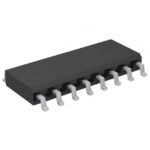 ALD810018SCLI
The activity of extra discounts on wholesale prices is in full swing…
Please fill in your contact information and we will send you the latest wholesale price list.





