 ChipApex | Global Electronic Components Supplier

SEARCH
Search Product
Search Post
— IC芯片 | 连接器 | 传感器 | 被动器件 —
Search productSearch post
— IC芯片 | 连接器 | 传感器 | 被动器件 —
Consult the customer manager about the wholesale price.
consultation hotline:86-132-6715-2157
email:[email protected]
Contact the product manager for consultation. One-stop consultation is available.
Do you want a lower wholesale price? Please send us your inquiry and we will reply immediately.
The Microlab AM-06F is a fixed coaxial attenuator designed for wireless applications. It provides a nominal attenuation of 6 dB across a frequency range of DC to 3 GHz. The component features an N-type connector configuration, specifically N-Female to N-Female, ensuring compatibility with standard commercial bandwidth networks. It supports an average power rating of 2 Watts and maintains a nominal impedance of 50 Ohms. This device is engineered for reliable signal reduction in RF systems operating within the specified frequency and power limits.
Verify that the required connector gender matches the AM-06F specification (N-Female to N-Female). Confirm the application frequency does not exceed 3 GHz and average power remains within the 2W limit. Ensure the system impedance is 50 Ohms. Check datasheet for VSWR requirements if high precision is needed, as values may vary by attenuation level. Cross-reference part number carefully to distinguish between Male/Female variants.
Select the AM-06F when a fixed 6 dB loss is required at DC-3 GHz. Choose this model over variable attenuators if cost and simplicity are priorities. Ensure the N-Female/N-Female interface aligns with existing cabling infrastructure. Consider the 2W power rating against peak and average load conditions. Verify physical size constraints if space is limited, though dimensions are not explicitly listed here.
The AM-06F belongs to the Microlab AM series of coaxial attenuators. This series covers DC to 3 GHz and includes various attenuation values and connector types. The AM series is designed for standard commercial applications. Other models in the line include different dB ratings and power handling capabilities. The AM-06F specifically addresses the need for moderate signal reduction in 50 Ohm systems.
Public confirmed substitute part numbers are not available in the provided documentation. Users should verify exact electrical and mechanical specifications before considering alternative brands or models. Connector gender and type must match precisely. Frequency range and power handling must meet or exceed original requirements.
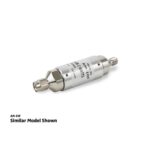 AM-06F

The activity of extra discounts on wholesale prices is in full swing…
Please fill in your contact information and we will send you the latest wholesale price list.





