 ChipApex | Global Electronic Components Supplier
SEARCH
Search Product
Search Post
— IC芯片 | 连接器 | 传感器 | 被动器件 —
Search productSearch post
— IC芯片 | 连接器 | 传感器 | 被动器件 —
Consult the customer manager about the wholesale price.
consultation hotline:86-132-6715-2157
email:[email protected]
Contact the product manager for consultation. One-stop consultation is available.
Do you want a lower wholesale price? Please send us your inquiry and we will reply immediately.
The AM1707BZKBA3 is a Texas Instruments ARM microprocessor based on the ARM926EJ-S core. It operates at clock frequencies of 375 MHz or 456 MHz, depending on the supply voltage. The device integrates 16KB instruction cache, 16KB data cache, 8KB vector table RAM, and 64KB ROM. Additional memory includes 128KB of on-chip RAM. Connectivity features include USB 2.0 OTG, USB 1.1 OHCI, 10/100 Mbps Ethernet MAC, three UARTs, two SPIs, and two I2C buses. Peripheral support encompasses McASP, eHRPWM, eCAP, eQEP, LCD controller, and PRUSS.
Verify the specific silicon revision and operating frequency variant (375 MHz vs 456 MHz) required for your design. Confirm that the ZKB package dimensions match your PCB footprint constraints. Ensure power supply rails meet the nominal voltage requirements for the selected clock speed to maintain signal integrity and thermal performance.
Select this component when a robust ARM9-based solution with integrated connectivity and real-time processing is needed. Consider the available pin count and peripheral multiplexing options. Evaluate the memory map compatibility with your existing software architecture. Verify that the commercial, industrial, or automotive temperature range meets your environmental specifications.
This part belongs to the AM170x family of ARM microprocessors designed for mixed-processor solutions. It targets applications requiring rich user interfaces and robust OS support. The device combines high processing performance with low power consumption, making it suitable for OEMs and ODMs seeking flexible integration of various communication and control interfaces.
Check for updated revisions within the AM170x family. Verify pin-to-pin compatibility if substituting with other variants in the series. Review any changes in peripheral availability or memory organization between different silicon revisions.
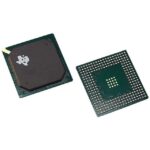 AM1707BZKBA3
The activity of extra discounts on wholesale prices is in full swing…
Please fill in your contact information and we will send you the latest wholesale price list.





