 ChipApex | Global Electronic Components Supplier
SEARCH
Search Product
Search Post
— IC芯片 | 连接器 | 传感器 | 被动器件 —
Search productSearch post
— IC芯片 | 连接器 | 传感器 | 被动器件 —
Consult the customer manager about the wholesale price.
consultation hotline:86-132-6715-2157
email:[email protected]
Contact the product manager for consultation. One-stop consultation is available.
Do you want a lower wholesale price? Please send us your inquiry and we will reply immediately.
The AM2732CMSFHQNZNRQ1 is an automotive-grade microcontroller from the Texas Instruments AM273x Sitara family. It features a dual-core Arm Cortex-R5F MCU subsystem and a single C66x floating-point DSP core. The device integrates up to 5.0MB of on-chip RAM, including shared L3 memory and dedicated subsystem memory. It supports extended automotive temperature ranges (-40°C to 140°C) and includes a Hardware Security Module (HSM). Connectivity options include Ethernet, MIPI D-PHY CSI 2.0, Aurora/LVDS, SPI, I2C, UART, and MCAN with CAN-FD support.
Verify the specific ordering suffix matches the required package type and temperature grade. Confirm that the NZN package variant aligns with your PCB footprint requirements. Ensure compatibility with recommended power management ICs such as the LP87745-Q1 for proper voltage sequencing. Check for any recent product change notifications regarding pinout or electrical characteristics before finalizing procurement.
Select this component when a mixed-processor solution combining real-time control and DSP capabilities is required. The AM2732CMSFHQNZNRQ1 is suitable for designs needing functional safety certification and robust security features. Consider the available on-chip memory size relative to application software demands. Evaluate the peripheral count against interface requirements for sensors and communication buses.
This part belongs to the AM273x Sitara microcontroller family, designed for industrial and automotive applications. It complements other devices in the portfolio by offering a balance of processing power and integrated peripherals. The family supports scalable solutions across various performance tiers, allowing designers to migrate between parts while maintaining software compatibility.
Direct substitutes within the same package and feature set are limited. Review the AM2732ADRFGQZCERQ1 for similar functionality in a different package configuration. Consult the official device comparison table to ensure peripheral and memory requirements are met by alternative models.
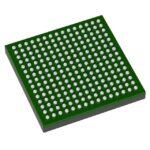 AM2732CMSFHQNZNRQ1
The activity of extra discounts on wholesale prices is in full swing…
Please fill in your contact information and we will send you the latest wholesale price list.




