 ChipApex | Global Electronic Components Supplier
SEARCH
Search Product
Search Post
— IC芯片 | 连接器 | 传感器 | 被动器件 —
Search productSearch post
— IC芯片 | 连接器 | 传感器 | 被动器件 —
Consult the customer manager about the wholesale price.
consultation hotline:86-132-6715-2157
email:[email protected]
Contact the product manager for consultation. One-stop consultation is available.
Do you want a lower wholesale price? Please send us your inquiry and we will reply immediately.
The AM29821ASC is a 10-bit bus driver from AMD's S Series, designed for TTL logic applications. It features true output polarity and three-state output characteristics to facilitate efficient data bus management in digital systems. The device operates within an extended temperature range of -55°C to 125°C, ensuring reliability in demanding environments. Packaged in a 28-pin ceramic LCC (LCC-28) with a metal-sealed cofired body, it supports a maximum operating frequency of 63 MHz. Key electrical specifications include a load capacitance of 50 pF and a maximum low-level output current of 32 mA.
Verify the specific suffix 'ASC' against official AMD documentation to confirm exact package variant and temperature grade. Ensure compatibility with existing 28-pin LCC footprints. Confirm RoHS status as historical records indicate non-compliance for this series. Validate supplier authenticity due to the component's age and potential availability through surplus channels.
Select this component when a 10-bit width is required for bus driving applications. Consider the ceramic LCC package for superior thermal and mechanical stability compared to plastic alternatives. Verify that the 63 MHz speed meets system timing requirements. Ensure the design accommodates the specific pinout and power dissipation characteristics of the metal-sealed ceramic package.
The AM29821 series belongs to AMD's legacy S Series of high-speed logic components. These bus drivers were widely used in computing and communication hardware during the era of TTL logic dominance. The AM29821ASC specifically denotes a variant optimized for industrial or military-grade temperature ranges, housed in a durable ceramic package suitable for harsh operational conditions.
Direct replacements may be limited due to the discontinuation of this specific AMD part. Evaluate generic 10-bit bus drivers with compatible pinouts and electrical characteristics. Verify that any substitute maintains the three-state functionality and TTL input thresholds. Cross-reference pin assignments carefully to avoid circuit modification.
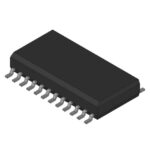 AM29821ASC
The activity of extra discounts on wholesale prices is in full swing…
Please fill in your contact information and we will send you the latest wholesale price list.





