 ChipApex | Global Electronic Components Supplier
SEARCH
Search Product
Search Post
— IC芯片 | 连接器 | 传感器 | 被动器件 —
Search productSearch post
— IC芯片 | 连接器 | 传感器 | 被动器件 —
Consult the customer manager about the wholesale price.
consultation hotline:86-132-6715-2157
email:[email protected]
Contact the product manager for consultation. One-stop consultation is available.
Do you want a lower wholesale price? Please send us your inquiry and we will reply immediately.
The AM3354ZCZ80 is a microprocessor from the Texas Instruments Sitara family, built on an ARM Cortex-A8 core. It operates at a maximum clock frequency of 800 MHz with a 32-bit data bus width. The device features integrated L1 and L2 caches, supporting LPDDR, DDR2, DDR3, and DDR3L memory controllers. It includes hardware acceleration for multimedia and NEON SIMD operations, alongside a graphics accelerator. Connectivity options include dual Ethernet ports (10/100/1000Mbps), USB 2.0 with PHY, and various serial interfaces such as CAN, I2C, McASP, McSPI, MMC/SD/SDIO, and UART. The processor supports 1.8V and 3.3V I/O voltages and is housed in a 324-NFBGA package.
Verify the specific suffix against official documentation to confirm pinout compatibility and electrical characteristics. Ensure that the selected variant matches the required operating temperature range and package type for your design. Cross-reference the datasheet revision history for any errata or marking changes that may impact integration. Confirm RoHS compliance status if environmental regulations apply to your manufacturing process.
Select this component when a balance of processing power and peripheral integration is required for embedded applications. Consider the available memory controllers and interface options to minimize external components. Evaluate the thermal performance within the specified operating temperature range during system design. Review the reference manual for detailed register configurations and boot sequence requirements.
This microprocessor belongs to the Sitara series, designed for cost-sensitive yet feature-rich embedded applications. It shares architectural similarities with other AM335x variants but offers specific performance levels suitable for mid-range computing tasks. The device integrates essential peripherals to reduce board space and complexity in industrial and commercial designs.
Consult the official AM335x datasheet for compatible substitutes within the same family. Verify pin-to-pin compatibility and software compatibility before transitioning to alternative part numbers.
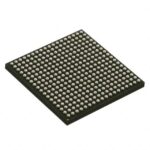 AM3354ZCZ80
The activity of extra discounts on wholesale prices is in full swing…
Please fill in your contact information and we will send you the latest wholesale price list.





