 ChipApex | Global Electronic Components Supplier
SEARCH
Search Product
Search Post
— IC芯片 | 连接器 | 传感器 | 被动器件 —
Search productSearch post
— IC芯片 | 连接器 | 传感器 | 被动器件 —
Consult the customer manager about the wholesale price.
consultation hotline:86-132-6715-2157
email:[email protected]
Contact the product manager for consultation. One-stop consultation is available.
Do you want a lower wholesale price? Please send us your inquiry and we will reply immediately.
The AM9517A-5JCTR is a Direct Memory Access (DMA) controller manufactured by Advanced Micro Devices using MOS technology. It is housed in a surface-mount SOIC-28 package, identified by the 'CTR' suffix indicating tape and reel packaging. The device operates on a nominal 5 V power supply and supports a maximum clock frequency of 5 MHz. It features a commercial temperature rating with an operating range from 0 °C to 70 °C. The component utilizes a dual-in-line compatible pinout adapted for surface mount applications, providing standard DMA control signals for interfacing with system buses.
Verify the specific suffix 'CTR' confirms the surface-mount tape-and-reel configuration distinct from through-hole variants. Confirm the '-5' speed grade corresponds to the 5 MHz operational limit required by the target system bus timing. Ensure compatibility with 5 V logic levels and check for RoHS compliance status as original AMD manufacturing records may vary regarding modern environmental certifications.
Select this component when a surface-mount DMA controller is required for 5 V systems with moderate speed demands up to 5 MHz. Compare against the AM9517A-5JC if through-hole mounting is preferred instead of SMD. Verify that the 28-pin SOIC footprint fits the PCB layout constraints. Consider the AM9517A-4JC if a lower speed grade is sufficient for the application to potentially reduce cost or power consumption.
The AM9517A series represents a generation of dedicated DMA controllers widely used in 16-bit microcomputer architectures during the 1980s and 1990s. The AM9517A specifically offers enhanced functionality over earlier iterations, including improved block transfer handling. The AM9517A-5JCTR is a specific surface-mount variant within this family, designed for automated assembly processes while maintaining electrical compatibility with the broader AM9517A product line.
Publicly confirmed direct substitute part numbers are not available in the provided source material. Engineering evaluation of functional equivalents from other manufacturers requires detailed verification of pinouts, timing parameters, and control signal definitions.
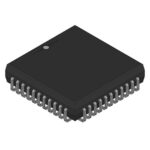 AM9517A-5JCTR
The activity of extra discounts on wholesale prices is in full swing…
Please fill in your contact information and we will send you the latest wholesale price list.





