 ChipApex | Global Electronic Components Supplier

SEARCH
Search Product
Search Post
— IC芯片 | 连接器 | 传感器 | 被动器件 —
Search productSearch post
— IC芯片 | 连接器 | 传感器 | 被动器件 —
Consult the customer manager about the wholesale price.
consultation hotline:86-132-6715-2157
email:[email protected]
Contact the product manager for consultation. One-stop consultation is available.
Do you want a lower wholesale price? Please send us your inquiry and we will reply immediately.
The AMC1311QDWVQ1 is a precision isolated amplifier from Texas Instruments, designed for automotive applications with AEC-Q100 qualification. It features galvanic isolation with an insulation voltage of 5000 Vrms and a 3dB bandwidth of 220 kHz. The device operates on a single supply voltage ranging from 4.5 V to 5.5 V, drawing a typical operating current of 9.7 mA. Key electrical specifications include an input bias current of 15 nA, an input offset voltage of 9.9 mV, and a gain error of 0.04%. It provides a maximum output current of 13 mA per channel and has a power dissipation of 97.9 mW. The component is housed in an SOIC-8 surface-mount package and functions within a temperature range of -40°C to +125°C.
Verify the specific suffix Q1 confirms AEC-Q100 automotive qualification status before procurement. Ensure the SOIC-8 package variant matches your PCB footprint requirements. Confirm that the 5000 Vrms isolation rating aligns with your system's safety clearance needs. Check humidity sensitivity levels for proper storage and reflow soldering profiles according to J-STD-020 standards.
Select this component when high accuracy and automotive reliability are required for isolated signal conditioning. The 220 kHz bandwidth supports dynamic current sensing applications. Consider the 9.9 mV input offset voltage impact on low-level signal measurements. The 5.5 V maximum supply voltage limits compatibility with higher voltage rail systems without level shifting.
This part belongs to the AMC1311 series of precision isolated amplifiers. It shares functional similarities with other members like the AMC1311QDWVRQ1, differing primarily in packaging format such as tube versus reel. The series is characterized by its use of capacitive isolation technology to achieve high isolation voltages while maintaining signal integrity in noisy automotive electrical environments.
The AMC1311QDWVRQ1 serves as a direct alternative with identical electrical characteristics but differs in tape-and-reel packaging instead of tubes. Verify that any substitute maintains the same AEC-Q100 grade and SOIC-8 pinout compatibility for seamless integration into existing designs.
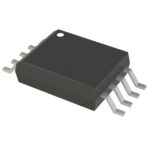 AMC1311QDWVQ1

The activity of extra discounts on wholesale prices is in full swing…
Please fill in your contact information and we will send you the latest wholesale price list.





