 ChipApex | Global Electronic Components Supplier

SEARCH
Search Product
Search Post
— IC芯片 | 连接器 | 传感器 | 被动器件 —
Search productSearch post
— IC芯片 | 连接器 | 传感器 | 被动器件 —
Consult the customer manager about the wholesale price.
consultation hotline:86-132-6715-2157
email:[email protected]
Contact the product manager for consultation. One-stop consultation is available.
Do you want a lower wholesale price? Please send us your inquiry and we will reply immediately.
The AMC1311QDWVRQ1 is an automotive-grade precision voltage isolation amplifier manufactured by Texas Instruments. It features a differential input and a differential output, designed for high-accuracy signal transmission across isolation barriers. The device operates within a supply voltage range of 3 V to 5.5 V and supports a maximum operating temperature of +125°C. It utilizes capacitive isolation technology to provide galvanic isolation, ensuring signal integrity in electrically noisy environments typical of automotive applications.
Verify the complete part number including suffixes such as 'Q1' for automotive qualification and 'RQ' for reel packaging when ordering. Confirm that the specific revision matches the design requirements. Ensure compatibility with the intended SOIC-8 footprint and check for any recent lifecycle status updates from the manufacturer before finalizing procurement plans.
Select this component when high-precision voltage isolation is required in automotive environments. It is suitable for applications needing differential inputs and outputs with strict accuracy constraints. Consider the 3 V to 5.5 V supply range and the +125°C thermal rating to ensure operation within system limits. Verify that the capacitive isolation barrier meets the specific voltage stress requirements of the application.
This device belongs to the AMC1311 family of precision isolation amplifiers from Texas Instruments. It is part of a broader portfolio of automotive-grade analog components designed for safety-critical and high-reliability systems. The family shares common interface characteristics but varies in gain and bandwidth specifications to suit different sensor types and signal conditioning needs.
Consult official Texas Instruments documentation for qualified alternatives within the AMC series. Cross-reference pinouts and isolation ratings carefully. No direct substitute part numbers are confirmed in the provided data; verify compatibility with existing board layouts and electrical specifications before considering any replacement options.
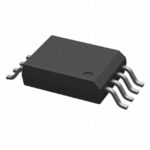 AMC1311QDWVRQ1

The activity of extra discounts on wholesale prices is in full swing…
Please fill in your contact information and we will send you the latest wholesale price list.





