 ChipApex | Global Electronic Components Supplier
AN79L15
Search Product
Search Post
— IC芯片 | 连接器 | 传感器 | 被动器件 —
Search productSearch post
— IC芯片 | 连接器 | 传感器 | 被动器件 —
Consult the customer manager about the wholesale price.
consultation hotline:86-132-6715-2157
email:[email protected]
Contact the product manager for consultation. One-stop consultation is available.
Do you want a lower wholesale price? Please send us your inquiry and we will reply immediately.
The AN79L15 is a three-terminal fixed negative output monolithic voltage regulator from the Panasonic AN79Lxx series, designed for applications requiring up to 100 mA of output current. It provides a stabilized -15 V DC output from an unstable input source without external components. The device features a maximum absolute input voltage rating of -35 V and operates within a junction temperature range of -55 °C to +125 °C. Electrical characteristics include a typical line regulation of 200 mV and load regulation of 25 mV under specified conditions.
Verify the specific package variant (AN79Lxx vs. AN79LxxM) required for the design, as pin configurations differ between SSIP003-P-0000 and HSIP003-P-0000B packages. Confirm lead-free status if environmental compliance is mandatory, noting that newer package codes indicate lead-free types. Ensure input voltage does not exceed the -35 V absolute maximum rating to prevent device failure.
Select this component when a fixed -15 V negative rail is needed with currents up to 100 mA. Consider the thermal dissipation capabilities relative to the ambient temperature and board copper area, as the device lacks active cooling mechanisms. Verify that the input voltage remains within the operational range (-18 V to -28 V for regulation) while respecting the -35 V absolute limit. Check if the standard or M-series package fits the PCB layout constraints.
The AN79L15 belongs to the AN79Lxx/AN79LxxM series of three-pin negative voltage regulators manufactured by Panasonic Electronic Components. This family offers twelve fixed output voltage options ranging from -4 V to -24 V. The series is engineered for general-purpose power supply applications where compact size and reliability are prioritized, serving as a direct replacement for other industry-standard negative linear regulators.
Cross-reference with L79L15 variants from other manufacturers for pin-compatible alternatives. Verify that substitute devices match the -15 V output, 100 mA current capacity, and -35 V input voltage limits. Ensure the replacement package type aligns with existing footprint requirements.
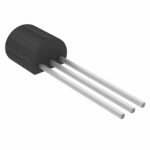 AN79L15
The activity of extra discounts on wholesale prices is in full swing…
Please fill in your contact information and we will send you the latest wholesale price list.