 ChipApex | Global Electronic Components Supplier
SEARCH
Search Product
Search Post
— IC芯片 | 连接器 | 传感器 | 被动器件 —
Search productSearch post
— IC芯片 | 连接器 | 传感器 | 被动器件 —
Consult the customer manager about the wholesale price.
consultation hotline:86-132-6715-2157
email:[email protected]
Contact the product manager for consultation. One-stop consultation is available.
Do you want a lower wholesale price? Please send us your inquiry and we will reply immediately.
The AP2011SL-13 is a synchronous buck DC-DC converter manufactured by Diodes Incorporated. It operates with an input voltage range of 3.6V to 18V and provides a fixed 5V output. The device delivers a maximum output current of 2A with an integrated P-channel MOSFET switch. Key electrical parameters include a switching frequency of 300kHz, adjustable up to 400kHz. It features voltage-mode PWM control with 0% to 100% duty cycle capability. The component supports operation within a temperature range of -20°C to +85°C and utilizes SOP-8L surface-mount packaging.
Verify the specific package variant and manufacturing date code against the official Diodes Incorporated datasheet before integration. Confirm that the SOP-8L footprint matches the design layout requirements. Ensure compliance with RoHS directives as specified in the product documentation. Cross-reference the part number suffix to guarantee exact functional equivalence with existing designs.
Select this component for applications requiring a robust 2A step-down solution from higher voltage rails. The fixed 5V output simplifies design for standard logic levels. Consider the 300kHz switching frequency for balancing efficiency and passive component size. The integrated protections reduce external component count compared to discrete solutions. Verify thermal performance under maximum load conditions given the compact package.
This device belongs to the Diodes Incorporated family of power management ICs designed for portable and industrial electronics. It addresses the need for efficient voltage conversion in systems powered by 12V or similar buses. The synchronous architecture improves efficiency over traditional linear regulators or non-synchronous converters. It serves as a critical power distribution element in complex electronic assemblies requiring stable 5V rails.
Consult the manufacturer's substitution guide for verified alternatives. Generic equivalents may lack identical protection thresholds or switching characteristics. Ensure any replacement maintains the same pinout and thermal dissipation capabilities to avoid redesigning the PCB layout.
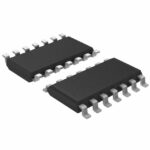 AP2011SL-13
The activity of extra discounts on wholesale prices is in full swing…
Please fill in your contact information and we will send you the latest wholesale price list.





