 ChipApex | Global Electronic Components Supplier
SEARCH
Search Product
Search Post
— IC芯片 | 连接器 | 传感器 | 被动器件 —
Search productSearch post
— IC芯片 | 连接器 | 传感器 | 被动器件 —
Consult the customer manager about the wholesale price.
consultation hotline:86-132-6715-2157
email:[email protected]
Contact the product manager for consultation. One-stop consultation is available.
Do you want a lower wholesale price? Please send us your inquiry and we will reply immediately.
The AP2014ASL-13 is a non-synchronous buck regulator controller manufactured by Diodes Incorporated. It operates within an input voltage range of 3.6 V to 18 V and supports output voltages from 800 mV to 18 V. The device features a fixed switching frequency of 400 kHz and includes integrated transistor driver outputs for external MOSFETs. It utilizes PWM control topology and offers shutdown functionality. The component is housed in an 8-SOIC package and is rated for operation between -40°C and +125°C junction temperature.
Verify the specific suffix 'SL' against the manufacturer's official datasheet to confirm pinout compatibility and thermal pad configuration. Ensure the selected variant matches the required operating temperature range and packaging style for your PCB layout. Cross-reference the ordering part number with the latest Diodes Incorporated documentation to avoid discrepancies in revision history or package dimensions.
Select this controller when a non-synchronous topology is sufficient for efficiency requirements and cost constraints. The integrated drivers simplify bill of materials by reducing external component count compared to basic PWM controllers. Evaluate the 400 kHz frequency against EMI constraints and inductor size requirements. Confirm that the external MOSFETs selected can handle the gate drive current and voltage levels specified in the electrical characteristics table.
This component belongs to the AP2014 series of power management ICs from Diodes Incorporated. It serves as a core control element in step-down converter designs, distinct from synchronous alternatives like the AP2014ASM which integrate internal switches. The family focuses on providing robust control loops for applications requiring wide input voltage ranges and reliable performance in industrial environments.
Public confirmed substitute part numbers are not available in the provided source data. Verify compatibility with alternative controllers such as the AP2014ASM if synchronous operation is acceptable, noting the difference in internal switch integration.
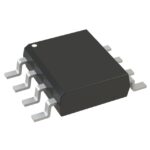 AP2014ASL-13
The activity of extra discounts on wholesale prices is in full swing…
Please fill in your contact information and we will send you the latest wholesale price list.





