 ChipApex | Global Electronic Components Supplier
SEARCH
Search Product
Search Post
— IC芯片 | 连接器 | 传感器 | 被动器件 —
Search productSearch post
— IC芯片 | 连接器 | 传感器 | 被动器件 —
Consult the customer manager about the wholesale price.
consultation hotline:86-132-6715-2157
email:[email protected]
Contact the product manager for consultation. One-stop consultation is available.
Do you want a lower wholesale price? Please send us your inquiry and we will reply immediately.
The AP2192MPG-13 is a dual high-side power switch IC from Diodes Incorporated, designed for USB power distribution. It operates within a supply voltage range of 2.7 V to 5.5 V and delivers a continuous output current of 1.5 A per channel with a maximum current limit of 2 A. The device features a typical on-resistance of 125 mOhms and a maximum of 110 mOhms. It utilizes an MSOP-8 EP package suitable for surface mount installation. Operating temperatures span from -40°C to +85°C, with a maximum turn-on time of 500 µs and turn-off time of 300 µs.
Verify the exact suffix against official Diodes Incorporated documentation, as the provided reference data primarily lists AP2192AMPG-13. Confirm package type and thermal pad specifications match your PCB layout requirements. Ensure compatibility with your system's voltage levels and current demands before finalizing procurement. Cross-reference the manufacturer part number directly with the datasheet to avoid substitution errors.
Select this component when dual-channel high-side switching is required with moderate current capabilities up to 1.5 A. It is suitable for applications needing low on-resistance and integrated protection in a compact MSOP-8 EP package. Consider the 2.7 V to 5.5 V operating range for compatibility with standard logic levels. Evaluate thermal performance based on the expected load current and ambient temperature conditions.
This component belongs to the AP2192 series of power switch ICs from Diodes Incorporated. It is categorized under Power Switch ICs - Power Distribution and USB Power Switches. The series is designed for efficient power management in portable devices, offering reliable switching with built-in protection features in a small form factor suitable for space-constrained designs.
AP2192AMPG-13 is a verified substitute within the same series. AP2162AMPG-13 offers similar dual-channel functionality but with a lower 1 A output current rating. Verify pinout compatibility and electrical parameters such as on-resistance and current limits before substituting.
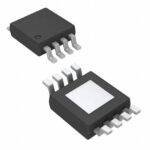 AP2192MPG-13
The activity of extra discounts on wholesale prices is in full swing…
Please fill in your contact information and we will send you the latest wholesale price list.





