 ChipApex | Global Electronic Components Supplier
SEARCH
Search Product
Search Post
— IC芯片 | 连接器 | 传感器 | 被动器件 —
Search productSearch post
— IC芯片 | 连接器 | 传感器 | 被动器件 —
Consult the customer manager about the wholesale price.
consultation hotline:86-132-6715-2157
email:[email protected]
Contact the product manager for consultation. One-stop consultation is available.
Do you want a lower wholesale price? Please send us your inquiry and we will reply immediately.
The AP22816BKAWT-7 is a single-channel USB power switch IC manufactured by Diodes Incorporated, designed for high-side load switching applications. It operates within an input voltage range of 2.7V to 5.5V and supports a continuous output current of up to 2A. The device features a typical on-resistance of 75 milliohms and includes integrated protection mechanisms such as fixed current limiting, overtemperature shutdown, reverse current blocking, and short-circuit protection with auto-recovery. It utilizes a TSOT-25 surface-mount package and functions across a temperature range of -40°C to 85°C.
Verify that the specific suffix BKAWT corresponds to the intended enable logic polarity and tape-and-reel packaging configuration. Confirm that the component meets RoHS compliance standards required for your assembly process. Ensure the operating temperature range aligns with your system's environmental specifications. Cross-reference the datasheet pinout against your PCB footprint design to prevent installation errors. Validate that the supplier provides authentic Diodes Incorporated products to avoid counterfeit risks.
Select this component when a compact solution is required for managing USB loads with built-in safety features. Consider the 75 milliohm on-resistance for efficiency calculations under full load conditions. Evaluate the need for the specific enable threshold characteristics provided by the 'B' variant. Assess whether the TSOT-25 package fits within your available board space constraints compared to larger alternatives.
This part belongs to the AP228xx series of USB power switches from Diodes Incorporated. These devices are engineered to meet USB specification requirements for thermal and electrical protection. The series offers various configurations to suit different control logic needs and package sizes. It serves as a critical interface component between host controllers and downstream peripherals.
Check for direct substitutes within the AP228xx family that share identical pinouts and electrical parameters. Verify compatibility with existing firmware or hardware control signals if replacing with variants having different enable polarities. Ensure any alternative maintains the same package dimensions for seamless board integration.
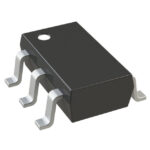 AP22816BKAWT-7
The activity of extra discounts on wholesale prices is in full swing…
Please fill in your contact information and we will send you the latest wholesale price list.





