 ChipApex | Global Electronic Components Supplier
SEARCH
Search Product
Search Post
— IC芯片 | 连接器 | 传感器 | 被动器件 —
Search productSearch post
— IC芯片 | 连接器 | 传感器 | 被动器件 —
Consult the customer manager about the wholesale price.
consultation hotline:86-132-6715-2157
email:[email protected]
Contact the product manager for consultation. One-stop consultation is available.
Do you want a lower wholesale price? Please send us your inquiry and we will reply immediately.
The AP22818BKBWT-7 is a USB power switch IC manufactured by Diodes Incorporated, housed in a TSOT-25 surface-mount package. It features a single N/P-channel high-side output with an on/off interface and non-inverting input logic. The device operates within a load voltage range of 2.7V to 5.5V without requiring a separate supply voltage. It supports a continuous output current of 2A with a maximum on-resistance of 75 milliohms. Integrated protection mechanisms include fixed current limiting, over-temperature shutdown, reverse current blocking, short-circuit protection, and under-voltage lockout (UVLO). A status flag indicates operational state, and the component functions across a temperature range of -40°C to +85°C.
Verify the specific suffix 'BKB' against the manufacturer datasheet to confirm pinout and electrical characteristics match design requirements. Confirm RoHS compliance status and moisture sensitivity level prior to assembly. Ensure ESD handling protocols are followed due to the small form factor. Cross-reference the ordering code with official distributor catalogs to avoid substitution errors.
Select this component when designing USB power paths requiring integrated protection and status feedback in a compact footprint. Compare on-resistance and current limits against alternative switches to ensure compatibility with target load specifications. Evaluate the need for reverse current blocking if bidirectional power flow is possible in the application environment.
This part belongs to the AP22818 series of USB power switches from Diodes Incorporated. The series offers various configurations optimized for portable applications. The TSOT-25 package provides a space-efficient solution for dense PCB layouts. The product line emphasizes reliability and integration to reduce external component count in modern consumer devices.
AP2822GKTR-G1 is a discontinued equivalent offering similar N-channel switching capabilities. Verify pin compatibility and protection feature alignment before substituting. Check for any differences in on-resistance or current ratings that may impact thermal performance.
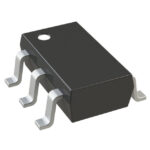 AP22818BKBWT-7
The activity of extra discounts on wholesale prices is in full swing…
Please fill in your contact information and we will send you the latest wholesale price list.





