 ChipApex | Global Electronic Components Supplier
SEARCH
Search Product
Search Post
— IC芯片 | 连接器 | 传感器 | 被动器件 —
Search productSearch post
— IC芯片 | 连接器 | 传感器 | 被动器件 —
Consult the customer manager about the wholesale price.
consultation hotline:86-132-6715-2157
email:[email protected]
Contact the product manager for consultation. One-stop consultation is available.
Do you want a lower wholesale price? Please send us your inquiry and we will reply immediately.
The AP2303MPTR-G1 is a DDR termination regulator manufactured by Diodes Incorporated, designed to generate termination voltage for DDR-SDRAM systems. It operates as a low-dropout linear regulator with an input voltage range of 1.2V to 5.5V and provides an output voltage range of 0.6V to 2.75V. The device features a reference voltage of 3.3V and maintains an accuracy of ±2%. It supports a maximum load current of 1.75A with a load regulation of 20mV. Thermal performance includes junction-to-ambient resistance of 80°C/W and junction-to-case resistance of 38°C/W. It functions within an operating temperature range of -40°C to 85°C and is housed in an 8-pin PSOP EP package.
Verify component authenticity through official manufacturer channels or authorized distributors. Confirm the specific suffix G1 matches project requirements. Check RoHS compliance status against current environmental regulations. Validate package type PSOP EP compatibility with PCB footprint designs. Ensure thermal management strategies align with specified junction-to-ambient resistance values for reliable operation under load conditions.
Select this component when designing DDR-SDRAM termination circuits requiring precise voltage regulation. Consider the 1.75A current capability and ±2% accuracy for signal integrity needs. Evaluate the 80°C/W thermal resistance for adequate heat dissipation in the target enclosure. Verify input voltage stability within the 1.2V to 5.5V range. Assess the 8-pin PSOP EP package dimensions for space-constrained layouts.
The AP2303 series from Diodes Incorporated specializes in power management solutions for memory applications. This specific part addresses the termination requirements of DDR SDRAM interfaces. It belongs to the PMIC category, focusing on specialized linear regulation rather than switching conversion. The design targets high-current termination needs while maintaining low noise characteristics essential for data transmission reliability.
Public confirmed substitute part numbers are not available in the provided documentation.
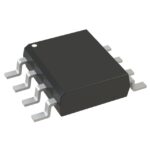 AP2303MPTR-G1
The activity of extra discounts on wholesale prices is in full swing…
Please fill in your contact information and we will send you the latest wholesale price list.





