 ChipApex | Global Electronic Components Supplier

SEARCH
Search Product
Search Post
— IC芯片 | 连接器 | 传感器 | 被动器件 —
Search productSearch post
— IC芯片 | 连接器 | 传感器 | 被动器件 —
Consult the customer manager about the wholesale price.
consultation hotline:86-132-6715-2157
email:[email protected]
Contact the product manager for consultation. One-stop consultation is available.
Do you want a lower wholesale price? Please send us your inquiry and we will reply immediately.
The AP2402A33KTR-E1 is a dual positive voltage regulator IC fabricated using CMOS process technology. It integrates two independent LDO channels, each providing a fixed output of 2.8V with a minimum output current capability of 300mA per channel. The device features high output voltage accuracy of ±2%, low quiescent current of 50µA typical per channel, and extremely low noise of 30µVrms over the 10Hz to 100kHz bandwidth. It operates within an ambient temperature range of -40°C to +85°C and utilizes a TSOT-23-6 package.
Verify the specific suffix 'KTR' corresponds to the TSOT-23-6 package type as indicated by the series documentation. Confirm RoHS compliance status through official manufacturer declarations. Ensure the input voltage range supports the required dropout characteristics for the 2.8V outputs. Check for any specific handling requirements related to the CMOS fabrication process during assembly.
Select this component when dual isolated rails are required from a single source in space-constrained designs. The TSOT-23-6 package offers a compact footprint suitable for portable devices. Consider the low standby current of 0.1µA for battery life optimization. Verify that the load requirements do not exceed the 300mA per channel limit. Evaluate the need for independent enable control versus simultaneous switching.
This part belongs to the AP2402 series of dual LDO regulators manufactured by Diodes Incorporated (formerly BCD Semiconductor). The series includes variants with different output voltage combinations such as 2.5V/1.8V and 2.8V/1.8V. The A33 designation specifically indicates the 2.8V/2.8V output configuration. The series is designed for low-noise applications requiring high accuracy and efficiency in mobile and wireless systems.
Check for other AP2402 variants with matching output voltages if package differences are acceptable. Verify compatibility with existing PCB footprints if considering SOT-23-6 or DFN-2x2-8 alternatives. Ensure electrical specifications such as PSRR and noise levels meet system requirements before substituting.
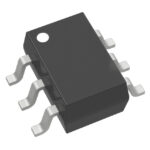 AP2402A33KTR-E1

The activity of extra discounts on wholesale prices is in full swing…
Please fill in your contact information and we will send you the latest wholesale price list.




