 ChipApex | Global Electronic Components Supplier
SEARCH
Search Product
Search Post
— IC芯片 | 连接器 | 传感器 | 被动器件 —
Search productSearch post
— IC芯片 | 连接器 | 传感器 | 被动器件 —
Consult the customer manager about the wholesale price.
consultation hotline:86-132-6715-2157
email:[email protected]
Contact the product manager for consultation. One-stop consultation is available.
Do you want a lower wholesale price? Please send us your inquiry and we will reply immediately.
The AP432AWL-7 is a three-terminal adjustable precision shunt regulator manufactured by Diodes Incorporated. It features a reference voltage of 1.24V with ±0.5% tolerance (AP432A variant). The device supports programmable output voltages up to 20V using external resistors. Key electrical parameters include a sink current capability of 200mA, a minimum cathode current for regulation of 150µA, and an equivalent full-range temperature coefficient of 30 ppm/°C. It operates within a temperature range of -20°C to +85°C and utilizes the SC59 surface-mount package.
Verify component authenticity through authorized Diodes Incorporated channels. Confirm the specific suffix matches the required tolerance and packaging configuration. Check for recent product change notices regarding manufacturing updates. Ensure compliance with RoHS directives if applicable to the target assembly. Validate that the SC59 footprint aligns with the design schematic before procurement.
Select this component when a stable, adjustable reference is needed within the commercial temperature range. The AP432A variant offers tighter initial accuracy compared to the standard AP432. Consider the 200mA sink capability for load requirements. Verify that the SC59 package dimensions fit the available board space. Evaluate stability boundary conditions if large load capacitances are present in the circuit design.
This part belongs to the AP432 family of adjustable precision shunt regulators from Diodes Incorporated. These devices are designed to replace traditional Zener diodes, offering superior performance characteristics such as lower dynamic impedance and better temperature stability. The family includes various package options and tolerance grades to suit different power management and signal conditioning needs.
Diodes Incorporated recommends using the AZ431L as a replacement for new designs. Verify pinout compatibility and electrical specifications before substituting. Ensure the alternative device meets the required temperature range and package constraints.
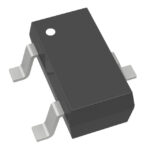 AP432AWL-7
The activity of extra discounts on wholesale prices is in full swing…
Please fill in your contact information and we will send you the latest wholesale price list.





