 ChipApex | Global Electronic Components Supplier
SEARCH
Search Product
Search Post
— IC芯片 | 连接器 | 传感器 | 被动器件 —
Search productSearch post
— IC芯片 | 连接器 | 传感器 | 被动器件 —
Consult the customer manager about the wholesale price.
consultation hotline:86-132-6715-2157
email:[email protected]
Contact the product manager for consultation. One-stop consultation is available.
Do you want a lower wholesale price? Please send us your inquiry and we will reply immediately.
The AP63203WU-7 is a synchronous buck switching regulator IC manufactured by Diodes Incorporated. It provides a fixed 3.3V output with a maximum current of 2A. The device operates within an input voltage range of 3.8V to 32V and features a switching frequency of 1.1MHz. It utilizes peak current mode control and includes integrated high-side (125mΩ) and low-side (68mΩ) power MOSFETs. The component supports operation from -40°C to +85°C ambient temperature and is housed in a TSOT-23-6 package.
Verify the specific suffix designation against the manufacturer datasheet to confirm pinout compatibility and thermal characteristics. Ensure that the ordering quantity aligns with the supplier's standard reel or cut-tape specifications. Confirm RoHS3 compliance status if required by your assembly process. Cross-reference the package marking code with official documentation to prevent counterfeit substitution during receipt inspection.
Select this component when a fixed 3.3V rail is required from a wide input voltage source up to 32V. The 2A output capability suits moderate load applications without requiring external passives for compensation. Consider the TSOT-23-6 footprint constraints for PCB layout density. Evaluate the 1.1MHz switching frequency against EMI requirements and inductor size trade-offs for the target application environment.
This part belongs to the AP6320x family of synchronous buck converters, which shares common internal architectures but differs in output voltage configurations. Variants such as AP63200, AP63201, and AP63205 offer different fixed or adjustable output voltages while maintaining similar input ranges and current capabilities. The WU suffix indicates the specific package type and tape-and-reel orientation used for surface-mount assembly.
AP63203QWU-7 serves as a qualified automotive-grade alternative within the same product family, offering extended temperature range capabilities. Both parts share identical electrical performance and pinouts, facilitating direct replacement in designs requiring higher reliability standards under varying environmental conditions.
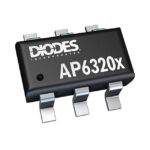 AP63203WU-7
The activity of extra discounts on wholesale prices is in full swing…
Please fill in your contact information and we will send you the latest wholesale price list.





