 ChipApex | Global Electronic Components Supplier
SEARCH
Search Product
Search Post
— IC芯片 | 连接器 | 传感器 | 被动器件 —
Search productSearch post
— IC芯片 | 连接器 | 传感器 | 被动器件 —
Consult the customer manager about the wholesale price.
consultation hotline:86-132-6715-2157
email:[email protected]
Contact the product manager for consultation. One-stop consultation is available.
Do you want a lower wholesale price? Please send us your inquiry and we will reply immediately.
The AP65502SP-13 is a synchronous buck DC/DC converter from Diodes Incorporated. It features integrated high-side and low-side MOSFETs for efficient power conversion. The device operates with an external compensation network and supports a switching frequency of 500 kHz. It provides positive adjustable output voltage regulation, capable of delivering up to 4 A of output current. The input voltage range spans from 4.5 V to 18 V, while the adjustable output voltage ranges from 0.765 V to 6 V. It is housed in an 8-SOIC package with an exposed pad (8-SO-EP) for enhanced thermal performance.
Verify the specific suffix 'SP-13' indicates the tape and reel packaging configuration as per Diodes Incorporated standards. Confirm RoHS compliance status through the official datasheet or component marking. Ensure the ordering part number matches the required package type and environmental rating for your specific application requirements.
Select this component when a 4 A synchronous buck converter with external compensation is required. It is suitable for applications needing a 500 kHz switching frequency and an input voltage range up to 18 V. Consider the 8-SO-EP package for thermal management needs. Verify that the external compensation components fit within the board space constraints.
This part belongs to the AP655xx series of synchronous buck converters from Diodes Incorporated. These ICs are designed for general-purpose power management applications requiring high efficiency and compact solutions. The series typically includes variants with different current ratings and fixed frequencies, sharing common architectural features like integrated MOSFETs and light load improvements.
Check for direct pin-compatible alternatives within the Diodes Incorporated AP655xx family. Verify if other manufacturers offer synchronous buck converters with similar 4 A output, 18 V max input, and 500 kHz frequency specifications. Ensure replacement parts support external compensation if that design constraint remains critical.
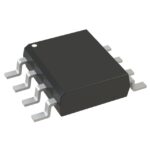 AP65502SP-13
The activity of extra discounts on wholesale prices is in full swing…
Please fill in your contact information and we will send you the latest wholesale price list.





