 ChipApex | Global Electronic Components Supplier
SEARCH
Search Product
Search Post
— IC芯片 | 连接器 | 传感器 | 被动器件 —
Search productSearch post
— IC芯片 | 连接器 | 传感器 | 被动器件 —
Consult the customer manager about the wholesale price.
consultation hotline:86-132-6715-2157
email:[email protected]
Contact the product manager for consultation. One-stop consultation is available.
Do you want a lower wholesale price? Please send us your inquiry and we will reply immediately.
The AP7311-30SNG-7 is a fixed-output low dropout linear regulator manufactured by Diodes Incorporated. It provides a stable 3.0 V output with a maximum load current of 150 mA. The device operates within an input voltage range of 2.0 V to 6.0 V and maintains a typical dropout voltage of 300 mV at full load. Quiescent current is specified at 85 µA, ensuring efficient power management in battery-powered applications. It features high power supply rejection ratio (PSRR) for noise-sensitive circuits. The component is housed in a compact SOT-23-5 surface-mount package, suitable for space-constrained designs.
Verify the specific suffix 'SNG' against the manufacturer's official datasheet to confirm pinout compatibility and thermal characteristics. Ensure the ordering part number matches the exact output voltage and package type required for your design. Cross-reference with Diodes Incorporated documentation to validate RoHS compliance status and any recent product change notifications affecting this specific variant.
Select this component when a fixed 3.0 V output is required with minimal external components. The 150 mA current capability suits moderate load applications. Consider the 2.0 V minimum input voltage constraint relative to your source supply. The SOT-23-5 package offers a balance between thermal performance and board space efficiency compared to larger packages.
This part belongs to the AP7311 series of low dropout regulators from Diodes Incorporated. The series includes various fixed and adjustable output variants. The AP7311 family is designed for portable applications where size and power efficiency are critical. Other members share similar internal architectures but differ in output voltage, current rating, or package style.
Compatible substitutes include other 3.0 V LDOs in SOT-23-5 packages from Diodes Incorporated, such as the AP7331 series if higher current is acceptable, provided pinouts are verified. Check electrical specifications like dropout voltage and PSRR to ensure functional equivalence.
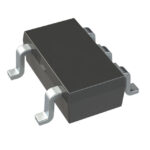 AP7311-30SNG-7
The activity of extra discounts on wholesale prices is in full swing…
Please fill in your contact information and we will send you the latest wholesale price list.




