 ChipApex | Global Electronic Components Supplier
SEARCH
Search Product
Search Post
— IC芯片 | 连接器 | 传感器 | 被动器件 —
Search productSearch post
— IC芯片 | 连接器 | 传感器 | 被动器件 —
Consult the customer manager about the wholesale price.
consultation hotline:86-132-6715-2157
email:[email protected]
Contact the product manager for consultation. One-stop consultation is available.
Do you want a lower wholesale price? Please send us your inquiry and we will reply immediately.
The AP7315-26W5-7 is a fixed-output low dropout regulator manufactured by Diodes Incorporated. It provides a nominal output voltage of 2.6V with an accuracy of ±1%. The device supports a maximum output current of 150mA and operates within an input voltage range of 1.7V to 5.25V. It features a quiescent current as low as 35µA, ripple rejection of 75dB at 1kHz, and output noise of 60µVrms from 10Hz to 100kHz. The component utilizes a SOT25 package and includes an enable pin for power control.
Verify the specific ordering suffix W5 corresponds to the SOT25 package configuration required for your design. Confirm that the non-discharge variant aligns with your system's power-down requirements. Ensure compatibility with RoHS 3 standards if applicable to your region. Validate that the 150mA output current meets the peak load demands of your target application circuit.
Select this component when a stable 2.6V rail is needed for low-power portable electronics. The wide input voltage range accommodates single-cell battery operation. Consider the SOT25 footprint constraints against available PCB space. Evaluate the 35µA quiescent current impact on overall battery life in standby modes compared to higher consumption alternatives.
This part belongs to the AP7315 series of low dropout regulators designed for handheld communication equipment. The series offers various fixed output voltages ranging from 1.1V to 3.3V. It is distinguished by its CMOS process technology which enables low power consumption and small physical size. The family supports dense PCB layouts through multiple package options including SOT23 and X2-DFN1010-4.
AP7315-26SA-7 (SOT23 Package)
The EN pin serves as the enable input. Driving it high turns the regulator on, while pulling it low activates shutdown mode. It must not be left floating.
No, the AP7315-26W5-7 does not include built-in output discharge. The 'D' suffix indicates the discharge variant.
The ripple rejection is typically 75dB at a frequency of 1kHz under standard test conditions.
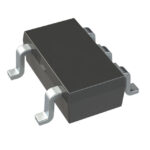 AP7315-26W5-7
The activity of extra discounts on wholesale prices is in full swing…
Please fill in your contact information and we will send you the latest wholesale price list.




