 ChipApex | Global Electronic Components Supplier
SEARCH
Search Product
Search Post
— IC芯片 | 连接器 | 传感器 | 被动器件 —
Search productSearch post
— IC芯片 | 连接器 | 传感器 | 被动器件 —
Consult the customer manager about the wholesale price.
consultation hotline:86-132-6715-2157
email:[email protected]
Contact the product manager for consultation. One-stop consultation is available.
Do you want a lower wholesale price? Please send us your inquiry and we will reply immediately.
The AP8802HSP-13 is a single-channel LED lighting driver IC from Diodes Incorporated, designed for high-efficiency step-down (Buck) conversion. It operates with an input voltage range of 8 V to 60 V and delivers a continuous output current of 1 A. The device features an adjustable switching frequency centered around 700 kHz, enabling the use of compact external components. It supports both analog and PWM dimming methods for precise brightness control. Integrated protections include open LED detection to ensure system reliability. The component is housed in an SO-8 EP package, suitable for surface-mount applications.
Verify the specific suffix 'HSP-13' against the manufacturer's latest datasheet to confirm pinout compatibility and RoHS status. Ensure the design accounts for the exposed pad thermal requirements inherent to the SO-8 EP package. Cross-reference the operating temperature range of -40°C to +105°C with your application environment. Confirm that the 700 kHz switching frequency aligns with your EMI constraints and inductor selection.
Select this component when a wide input voltage range up to 60 V is required for LED strings. It is suitable for designs needing integrated open-circuit protection without external sensing circuits. Consider the SO-8 EP package for thermal management needs in compact footprints. Evaluate the 1 A output capability against the target LED array current requirements. Verify compatibility with existing PCB layout guidelines for Buck converters.
This part belongs to the AP8802 series of LED drivers from Diodes Incorporated. The series includes variants such as the AP8802SPG-13, which shares similar functional characteristics but may differ in maximum voltage ratings or packaging options. These devices are categorized under LED Lighting Drivers within the broader Driver ICs subcategory, targeting efficient power management for solid-state lighting applications.
Publicly confirmed substitute part numbers are not available in the provided documentation. Designers should consult the manufacturer's official replacement guide or contact technical support directly for qualified alternatives. Do not assume cross-compatibility with other manufacturers' parts without verifying electrical parameters and pin configurations.
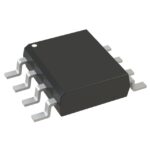 AP8802HSP-13
The activity of extra discounts on wholesale prices is in full swing…
Please fill in your contact information and we will send you the latest wholesale price list.





