 ChipApex | Global Electronic Components Supplier
SEARCH
Search Product
Search Post
— IC芯片 | 连接器 | 传感器 | 被动器件 —
Search productSearch post
— IC芯片 | 连接器 | 传感器 | 被动器件 —
Consult the customer manager about the wholesale price.
consultation hotline:86-132-6715-2157
email:[email protected]
Contact the product manager for consultation. One-stop consultation is available.
Do you want a lower wholesale price? Please send us your inquiry and we will reply immediately.
The AP9101CAK-BETRG1 is a single-chip protection IC designed for lithium-ion and lithium-polymer rechargeable battery packs. It integrates high-precision voltage detection circuits to monitor overcharge, overdischarge, overcharge current, and overdischarge conditions, controlling external MOSFET switches for safety. The device operates within a supply voltage range of 1.5 V to 5.5 V and supports output voltages from 2.4 V to 4.5 V. It features low power consumption with typical operating current of 3 µA and standby current of 0.01 µA. The component is housed in an SOT-25-5 surface-mount package and functions reliably across temperatures from -40°C to +85°C.
Verify the specific suffix code 'BE' against the manufacturer's official datasheet to confirm exact detection voltage thresholds and hysteresis values, as these parameters vary significantly across the AP9101C series. Confirm package availability and RoHS compliance status directly with Diodes Incorporated or authorized distributors before finalizing procurement specifications.
Select this component when designing for single-cell Li-ion or Li-Po batteries requiring integrated protection with minimal external components. Ensure the required overcharge and overdischarge detection thresholds align with the specific voltage ranges defined by the 'BE' suffix variant. Verify that the SOT-25-5 package fits the PCB layout constraints and that the operating temperature range meets the application environment requirements.
The AP9101CAK-BETRG1 belongs to the AP9101C family of battery management ICs manufactured by Diodes Incorporated. This series is engineered specifically for single-cell lithium-based battery applications, offering a compact solution for protecting cells from electrical faults. The part utilizes standard surface-mount packaging suitable for automated assembly processes in consumer electronics manufacturing.
No, the device includes a built-in fixed time circuit, eliminating the need for external capacitors for protection timing delays.
The typical power-down mode current consumption is 0.01 µA at 25°C.
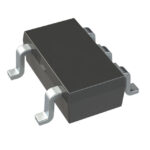 AP9101CAK-BETRG1
The activity of extra discounts on wholesale prices is in full swing…
Please fill in your contact information and we will send you the latest wholesale price list.





