ChipApex | Global Electronic Components Supplier
SEARCH
Search Product
Search Post
— IC芯片 | 连接器 | 传感器 | 被动器件 —
Search productSearch post
— IC芯片 | 连接器 | 传感器 | 被动器件 —
Consult the customer manager about the wholesale price.
consultation hotline:86-132-6715-2157
email:[email protected]
Contact the product manager for consultation. One-stop consultation is available.
Do you want a lower wholesale price? Please send us your inquiry and we will reply immediately.
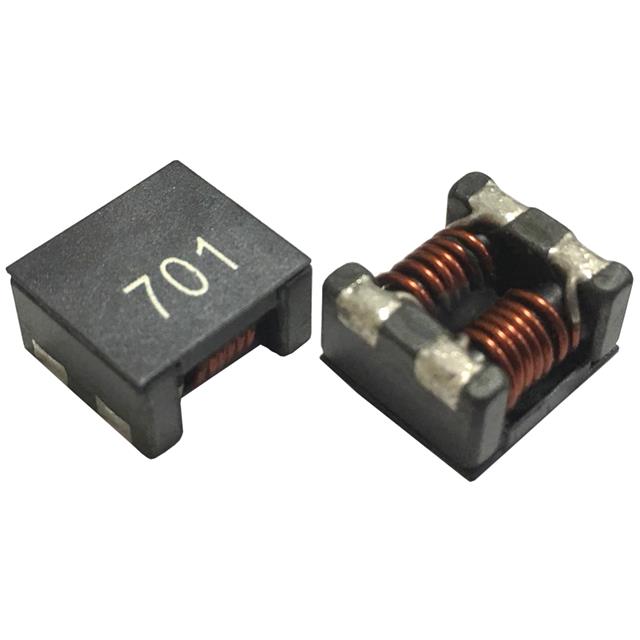
The APPM00070638301XY0 is a two-line common mode choke manufactured by Pulse Electronics, designed for surface mount technology (SMD/SMT) PCB mounting. It operates within an unshielded configuration and features ferrite core construction. The component exhibits an impedance of 300 Ohms at a test frequency of 100 MHz. It supports a maximum DC current of 5 A with a low maximum DC resistance of 10 mOhms. The device functions reliably across a temperature range from -40°C to +125°C. Its physical dimensions are 7 mm in length, 6 mm in width, and 3.8 mm in height.
Verify the specific manufacturer part number against official Pulse Electronics documentation to ensure compatibility with design requirements. Confirm that the unshielded construction aligns with electromagnetic interference constraints. Validate thermal performance specifications against operational environmental conditions. Ensure surface mount footprint dimensions match the printed circuit board layout. Check for any updated regulatory compliance certifications prior to final procurement authorization.
Select this component when high current capacity is required for common mode noise reduction in automotive systems. The low DC resistance minimizes power loss in power line applications. Consider the unshielded design if spatial constraints or specific EMI profiles favor open-core structures. Evaluate the operating temperature range against the intended deployment environment. Compare impedance characteristics at target frequencies to ensure adequate noise attenuation performance.
This component belongs to the APPM series of common mode chokes from Pulse Electronics. The series targets automotive and multimedia sectors requiring robust noise filtering. It complements other magnetic components in power management circuits. The product line emphasizes reliability under varying thermal conditions. Integration supports modern electronic architectures needing compact, high-performance filtering solutions.
Consult official distributor databases for verified substitute part numbers. Cross-reference impedance values and current ratings before substitution. Verify package dimensions and pin configurations for mechanical compatibility. Ensure replacement components meet identical automotive qualification standards.
 APPM00070638301XY0
The activity of extra discounts on wholesale prices is in full swing…
Please fill in your contact information and we will send you the latest wholesale price list.