 ChipApex | Global Electronic Components Supplier
SEARCH
Search Product
Search Post
— IC芯片 | 连接器 | 传感器 | 被动器件 —
Search productSearch post
— IC芯片 | 连接器 | 传感器 | 被动器件 —
Consult the customer manager about the wholesale price.
consultation hotline:86-132-6715-2157
email:[email protected]
Contact the product manager for consultation. One-stop consultation is available.
Do you want a lower wholesale price? Please send us your inquiry and we will reply immediately.
The Panasonic APT1232WAY is a single-channel phototriac output optocoupler housed in a 6-DIP Gull Wing package. It features an integrated zero-crossing circuit for low electromagnetic interference switching. Key electrical parameters include a maximum continuous output current of 100 mA, a peak off-state voltage (VDRM) of 600 V, and an isolation voltage of 5000 Vrms. The device operates with a forward current up to 50 mA and has a maximum trigger current of 10 mA. It supports a wide operating temperature range from -40°C to +100°C.
Verify the specific suffix 'WA' against official Panasonic documentation to confirm pinout and packaging details, as distributor listings may vary. Confirm RoHS compliance status directly with the manufacturer or authorized distributors. Check for Not Recommended for New Design (NRND) status if applicable to long-term supply chain planning.
Select this component when zero-crossing switching is required to reduce noise in AC applications. Ensure the load voltage does not exceed the 600 V rating and the current remains within the 100 mA limit. Verify that the DIP-6 Gull Wing package fits the target PCB footprint and that the operating temperature range meets environmental requirements.
This part belongs to the Panasonic APT series of optocouplers, which are engineered for industrial automation and consumer appliance control. The series emphasizes reliability and safety certifications, making it suitable for applications requiring strict isolation standards and robust performance under varying thermal conditions.
Consult official Panasonic substitution guides for direct equivalents. Generic replacements must match the 6-pin DIP Gull Wing package, 5000 Vrms isolation, and zero-crossing functionality. Verify pin compatibility and electrical ratings before integration.
Yes, the device integrates a zero-crossing circuit to ensure the triac turns on only when the AC voltage is near zero, reducing electrical noise.
The APT1232WAY provides an isolation voltage of 5000 Vrms between the input LED and the output triac.
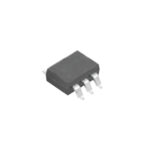 APT1232WAY
The activity of extra discounts on wholesale prices is in full swing…
Please fill in your contact information and we will send you the latest wholesale price list.







