ChipApex | Global Electronic Components Supplier
SEARCH
Search Product
Search Post
— IC芯片 | 连接器 | 传感器 | 被动器件 —
Search productSearch post
— IC芯片 | 连接器 | 传感器 | 被动器件 —
Consult the customer manager about the wholesale price.
consultation hotline:86-132-6715-2157
email:[email protected]
Contact the product manager for consultation. One-stop consultation is available.
Do you want a lower wholesale price? Please send us your inquiry and we will reply immediately.
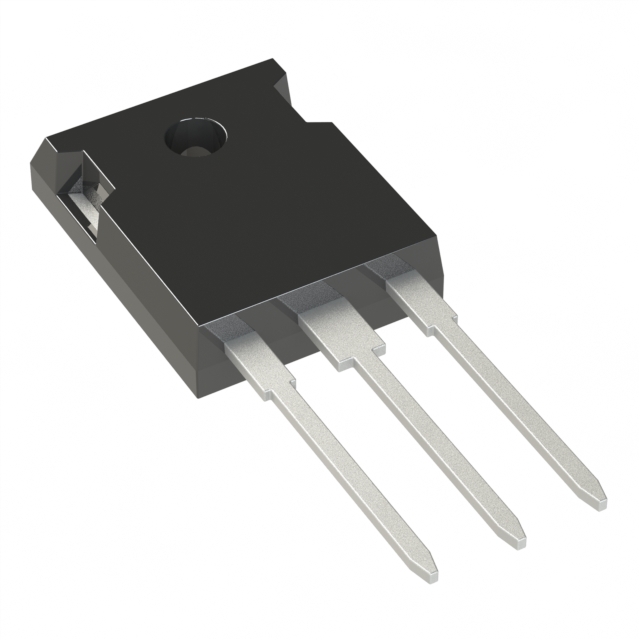
The APT20GN60BDQ2G is a single N-channel Insulated Gate Bipolar Transistor (IGBT) manufactured by Microchip Technology. It utilizes Fieldstop Low Frequency Combi technology and is housed in a TO-247-3 package for through-hole mounting. The device features a maximum collector-emitter voltage of 600 V and a continuous collector current of 40 A at 25°C. Power dissipation is rated at 136 W, with an operating temperature range spanning from -55°C to +175°C. The gate-emitter leakage current is specified at 300 nA.
Verify the specific datasheet version when sourcing this component, as parameter variations may exist between revisions. Confirm that the TO-247-3 package dimensions align with the target PCB footprint requirements. Ensure thermal management solutions are adequate for the 136 W power dissipation rating under actual operating conditions. Check RoHS compliance status if environmental regulations apply to the final assembly.
Select this part for applications requiring robust low-frequency switching performance with high current handling capabilities. The 600 V rating suits medium-voltage AC/DC conversion tasks. Consider the thermal resistance characteristics of the TO-247 package when designing heat sinks. Compare against other single IGBTs in the same voltage class if higher switching frequencies or different packaging options are required.
This component belongs to Microchip's APT series of discrete IGBTs, which are designed for general-purpose power switching applications. The series emphasizes reliability and efficiency in industrial environments. The TO-247 package provides a balance between electrical performance and mechanical robustness, making it suitable for board-level integration in various power electronics topologies.
The APT20GN60SDQ2G is a documented substitute within the same product family, offering identical electrical specifications but utilizing a surface-mount D3PAK-3 package instead of the through-hole TO-247-3 form factor. Verify PCB layout compatibility before substitution.
 APT20GN60BDQ2G
The activity of extra discounts on wholesale prices is in full swing…
Please fill in your contact information and we will send you the latest wholesale price list.