 ChipApex | Global Electronic Components Supplier
SEARCH
Search Product
Search Post
— IC芯片 | 连接器 | 传感器 | 被动器件 —
Search productSearch post
— IC芯片 | 连接器 | 传感器 | 被动器件 —
Consult the customer manager about the wholesale price.
consultation hotline:86-132-6715-2157
email:[email protected]
Contact the product manager for consultation. One-stop consultation is available.
Do you want a lower wholesale price? Please send us your inquiry and we will reply immediately.
The Microchip AR1011T-I/SS is a resistive touch screen controller from the mTouch AR1000 Series, designed for high-volume, small form factor applications. It supports 4-wire, 5-wire, and 8-wire analog resistive sensors with up to 10-bit resolution. The device features a typical coordinate report rate of 140 reports per second and includes built-in drift compensation algorithms. It operates on a supply voltage of 2.5V to 5.0V ±5% and communicates via UART at a baud rate of 9600. Key power specifications include a standby current of 85 µA (typical) at 5V and an operating 'no touch' current of 3.0 mA.
Verify that the specific part number AR1011T-I/SS corresponds to the UART interface variant, as other models in the AR1000 series support I2C or SPI. Confirm the SSOP-20 package requirement matches the PCB footprint. Ensure the host system provides a 9600 baud UART connection compatible with the controller's communication protocol.
Select this component when a UART interface is required instead of I2C or SPI. It is suitable for designs needing hardware-selectable sensor types (4/8-wire vs 5-wire) via the M2 pin. Consider the 17 mA typical operating current during touch events for power budget calculations. Verify that the application environment falls within the industrial temperature range of -40°C to +85°C.
The AR1011T-I/SS belongs to the Microchip mTouch AR1000 Series, which also includes variants like the AR1021 supporting I2C/SPI interfaces. While sharing core decoding algorithms and sensor compatibility, the AR1011 is distinct due to its UART-only communication mode. This differentiation allows designers to choose the appropriate interface based on host microcontroller capabilities without changing the touch sensing architecture.
The AR1021T-I/SS offers identical sensor support and processing but uses I2C/SPI interfaces instead of UART. Direct replacement requires verifying that the host system can switch from UART to I2C/SPI protocols. Other AR1000 series members may share mechanical footprints but differ in electrical interfaces.
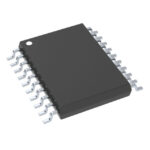 AR1011T-I/SS
The activity of extra discounts on wholesale prices is in full swing…
Please fill in your contact information and we will send you the latest wholesale price list.






