 ChipApex | Global Electronic Components Supplier
SEARCH
Search Product
Search Post
— IC芯片 | 连接器 | 传感器 | 被动器件 —
Search productSearch post
— IC芯片 | 连接器 | 传感器 | 被动器件 —
Consult the customer manager about the wholesale price.
consultation hotline:86-132-6715-2157
email:[email protected]
Contact the product manager for consultation. One-stop consultation is available.
Do you want a lower wholesale price? Please send us your inquiry and we will reply immediately.
The Microchip Technology AR1100-I/SO is a fully integrated resistive touch screen controller supporting 4, 5, and 8-wire analog sensors. It features automatic detection and selection between USB V2.0 Full Speed and UART (9600 baud) communication protocols. The device operates on a 3.3V to 5.0V supply with an operating current of less than 25 mA during touch activity. It provides up to 10-bit resolution for touch coordinates, dynamically adapting to sensor electrical characteristics such as contact resistance and capacitance. The component includes 96 bytes of user EEPROM for configuration storage and supports industrial temperature ranges within a 20-lead SOIC package.
Verify the specific suffix 'I/SO' confirms the Industrial temperature range (-40°C to +85°C) and the 20-lead SOIC package type. Ensure the ordering part number matches the required tape and reel or cut tape format if applicable. Confirm that the device revision aligns with the latest data sheet DS41606B for accurate pinout and electrical specifications.
Select this component when a universal resistive touch solution is required without complex configuration. The AR1100-I/SO is suitable for designs needing plug-and-play USB compatibility with standard OS drivers or simple UART integration. Consider the 20-lead SOIC package constraints and ensure the host system supports the required 3.3V to 5.0V operating voltage range.
The AR1100 series builds upon the AR1000 family, offering enhanced field flash updatability and broader operating system driver support. The '-I' designation indicates the industrial temperature grade, while '/SO' specifies the 20-lead Small Outline Integrated Circuit package. This part serves as a bridge between legacy resistive sensors and modern digital interfaces.
Direct replacements include other variants within the AR1100 family, such as AR1100T-I/SS (SSOP package) or AR1100-I/QFN (QFN package), provided the mechanical footprint and pinout compatibility are verified. Cross-family upgrades may require schematic and firmware modifications.
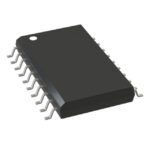 AR1100-I/SO
The activity of extra discounts on wholesale prices is in full swing…
Please fill in your contact information and we will send you the latest wholesale price list.






