 ChipApex | Global Electronic Components Supplier
SEARCH
Search Product
Search Post
— IC芯片 | 连接器 | 传感器 | 被动器件 —
Search productSearch post
— IC芯片 | 连接器 | 传感器 | 被动器件 —
Consult the customer manager about the wholesale price.
consultation hotline:86-132-6715-2157
email:[email protected]
Contact the product manager for consultation. One-stop consultation is available.
Do you want a lower wholesale price? Please send us your inquiry and we will reply immediately.
The ARD60012Q is a coaxial RF switch manufactured by Panasonic Electric Works, designed for high-frequency applications up to 26.5 GHz. It features a Single Pole Double Throw (SPDT) topology with a 50 Ohm impedance. The device operates using a 12 VDC coil voltage and utilizes solder terminals for termination. Key electrical specifications include a maximum insertion loss of 0.8 dB and a minimum isolation of 55 dB at the test frequency of 26.5 GHz. The component has a Voltage Standing Wave Ratio (VSWR) of 1.7 and complies with RoHS standards.
Verify the part number ARD60012Q against official Panasonic Electric Works documentation to confirm authenticity. Ensure the component matches the specified 26.5 GHz frequency range and 12 VDC coil voltage requirements. Check for RoHS compliance status as indicated in official datasheets. Confirm that the solder terminal termination style aligns with your PCB design constraints before finalizing procurement.
Select this component when an SPDT coaxial switch is required for frequencies up to 26.5 GHz. Consider the 0.8 dB maximum insertion loss and 55 dB minimum isolation metrics for signal integrity. Ensure the system can provide the necessary 12 VDC control voltage. Verify that the 50 Ohm impedance matches the surrounding circuitry to maintain optimal VSWR performance.
The ARD60012Q belongs to the ARD series of coaxial switches from Panasonic Industry. This series includes various configurations such as transfer and SP6T types, all offering excellent high-frequency characteristics. The ARD series is designed for robust performance in demanding RF environments, providing reliable switching capabilities across a wide frequency spectrum with standardized impedance.
Consult official Panasonic Electric Works documentation for verified substitute part numbers within the ARD series or other compatible RF switch families. Cross-reference technical specifications including frequency range, topology, and coil voltage to ensure functional equivalence. Do not assume interchangeability without validating specific electrical parameters against the original component requirements.
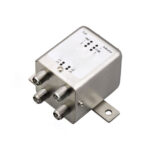 ARD60012Q
The activity of extra discounts on wholesale prices is in full swing…
Please fill in your contact information and we will send you the latest wholesale price list.




