 ChipApex | Global Electronic Components Supplier
SEARCH
Search Product
Search Post
— IC芯片 | 连接器 | 传感器 | 被动器件 —
Search productSearch post
— IC芯片 | 连接器 | 传感器 | 被动器件 —
Consult the customer manager about the wholesale price.
consultation hotline:86-132-6715-2157
email:[email protected]
Contact the product manager for consultation. One-stop consultation is available.
Do you want a lower wholesale price? Please send us your inquiry and we will reply immediately.
The AS1323-BTTT-33 is a single-cell DC-DC step-up converter manufactured by ams OSRAM. It provides a fixed positive output voltage of 3.3V with a maximum switch current of 1A. The device operates within an input voltage range of 0.75V to 2V and features a low quiescent current of 1.6µA. It utilizes synchronous rectification for improved efficiency and is housed in a SOT-23-5 Thin or TSOT-23-5 package. The component supports surface mount mounting and functions across an operating temperature range of -40°C to 85°C.
Verify the specific suffix 'BTTT' corresponds to the required tape-and-reel packaging format and pin configuration. Confirm that the fixed 3.3V output aligns with system requirements, as alternative voltage options exist within the AS1323 family. Ensure compatibility with the SOT-23-5 Thin footprint during PCB layout. Check for RoHS compliance documentation if environmental regulations apply to the final assembly.
Select this component when a fixed 3.3V output is required from a single-cell lithium-ion or similar battery source. The 1A switch current capability suits moderate load applications. Consider the 1.6µA quiescent current for standby-sensitive designs. Evaluate the SOT-23-5 Thin package constraints against available board space. Compare against other AS1323 variants if different output voltages or packaging styles are needed.
The AS1323 series represents a family of highly efficient, single-cell DC-DC step-up converters designed by ams OSRAM. These regulators are engineered for portable applications where space and power efficiency are critical. The series offers various fixed output voltages and packaging options to accommodate diverse design requirements while maintaining consistent performance characteristics across the product line.
The AS1323-BTTT-30 serves as a functional substitute offering a fixed 3V output instead of 3.3V. Both components share identical electrical specifications regarding input range, output current, and package type. Verify that the target application can tolerate the 0.3V difference in output voltage before substituting.
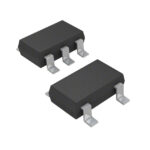 AS1323-BTTT-33
The activity of extra discounts on wholesale prices is in full swing…
Please fill in your contact information and we will send you the latest wholesale price list.





