 ChipApex | Global Electronic Components Supplier
SEARCH
Search Product
Search Post
— IC芯片 | 连接器 | 传感器 | 被动器件 —
Search productSearch post
— IC芯片 | 连接器 | 传感器 | 被动器件 —
Consult the customer manager about the wholesale price.
consultation hotline:86-132-6715-2157
email:[email protected]
Contact the product manager for consultation. One-stop consultation is available.
Do you want a lower wholesale price? Please send us your inquiry and we will reply immediately.
The AS1706 is a 1.6W bridged audio power amplifier from the AS1701/AS1706 series, designed for single-supply operation between 2.7V and 5.5V. It delivers 1.6W into a 4Ω load at 1% THD+N with 5V supply, or 0.8W into 8Ω. The device features greater than 65dB PSRR at 217Hz, integrated click-and-pop suppression, and low-power shutdown mode consuming 10nA. It includes over-temperature and over-current protection, operates within -40°C to +85°C, and is housed in an 8-pin MSOP package.
Verify the SHDN pin configuration matches your system logic: connect SHDN to VDD for active-low shutdown control specific to the AS1706 model. Confirm the required delivery format (Tube vs. Tape and Reel) aligns with your assembly equipment capabilities. Ensure the operating voltage range of 2.7V to 5.5V is compatible with your power supply design.
Select the AS1706 when an active-low shutdown signal is required, as opposed to the AS1701 which uses active-high control. This component is suitable for applications needing high power efficiency and minimal external components. Consider the 8-pin MSOP package constraints for thermal management if continuous high-power operation near 1.6W is expected.
The AS1706 belongs to the AS1701/AS1706 family of 1.6W audio power amplifiers manufactured by austriamicrosystems AG (now ams-OSRAM). These devices utilize a bridge-tied load configuration to maximize output power from a single supply rail while maintaining high total harmonic distortion performance.
The AS1701 is the primary alternative within the same datasheet, differing only in shutdown logic polarity (Active-High vs. Active-Low). Verify that the system's shutdown control signal polarity matches the replacement part's requirement before substitution.
The AS1706 features an active-low shutdown control, requiring the SHDN pin to be connected to VDD to enter shutdown mode. The AS1701 uses active-high shutdown, requiring connection to GND.
The BIAS pin provides a DC bias bypass connection. It is internally connected to the non-inverting input of one amplifier and should be connected to the non-inverting input of the other amplifier for proper signal biasing and click/pop suppression.
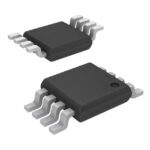 AS1706
The activity of extra discounts on wholesale prices is in full swing…
Please fill in your contact information and we will send you the latest wholesale price list.





