 ChipApex | Global Electronic Components Supplier
SEARCH
Search Product
Search Post
— IC芯片 | 连接器 | 传感器 | 被动器件 —
Search productSearch post
— IC芯片 | 连接器 | 传感器 | 被动器件 —
Consult the customer manager about the wholesale price.
consultation hotline:86-132-6715-2157
email:[email protected]
Contact the product manager for consultation. One-stop consultation is available.
Do you want a lower wholesale price? Please send us your inquiry and we will reply immediately.
The AS3422-EQFP-500 is a low-power ambient noise-canceling speaker driver designed for headsets and headphones. It features a fully analog implementation to minimize power consumption and system BOM cost while enhancing voice quality. The device supports feed-forward and feedback topologies, offering 12–30dB noise reduction across a 10–3000Hz frequency range. It includes a high-efficiency headphone amplifier delivering up to 2x23mW at 32Ω with 100dB SNR. Integrated OTP ROM allows for microphone gain calibration and application-specific settings. The unit operates on a fixed 1.0–1.8V supply with an internal charge pump.
Verify the package type matches the datasheet specification of QFN32 with 0.5mm pitch, as the model suffix may indicate variations. Confirm that the ordering code corresponds to the specific revision required for your design. Ensure compatibility with the 1.0V to 1.8V supply voltage range during integration. Check for any specific production trimming requirements stored in the OTP memory.
Select this component when a fully analog solution is preferred over DSP implementations to reduce system cost and power usage. It is suitable for designs requiring simple SW calibration via line-in or serial interface. Consider the QFN32 package if space constraints allow for the 0.5mm pitch footprint. Evaluate the need for feedback topology support, which distinguishes it from the feed-forward only AS3421 variant.
The AS3422 is part of the AS3421/22 family of low-power ambient noise-canceling speaker drivers manufactured by ams-OSRAM USA INC. While the AS3421 offers a single operational amplifier for feed-forward applications, the AS3422 includes an additional op-amp stage to support feedback ANC topologies. Both devices share similar power management and audio processing features but differ in their filtering capabilities and package options.
The AS3421 is a related variant within the same family but lacks the second operational amplifier required for feedback ANC configurations. Verify that the target application utilizes a feed-forward topology before considering the AS3421 as a substitute. Package differences between QFN24 and QFN32 must be accounted for in PCB layout changes.
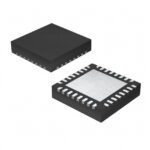 AS3422-EQFP-500
The activity of extra discounts on wholesale prices is in full swing…
Please fill in your contact information and we will send you the latest wholesale price list.







