 ChipApex | Global Electronic Components Supplier
SEARCH
Search Product
Search Post
— IC芯片 | 连接器 | 传感器 | 被动器件 —
Search productSearch post
— IC芯片 | 连接器 | 传感器 | 被动器件 —
Consult the customer manager about the wholesale price.
consultation hotline:86-132-6715-2157
email:[email protected]
Contact the product manager for consultation. One-stop consultation is available.
Do you want a lower wholesale price? Please send us your inquiry and we will reply immediately.
The AS431HMBNTR-G1 is a three-terminal adjustable precision shunt regulator manufactured by Diodes Incorporated. It operates within a cathode voltage range of 2.495V to 36V and features a 1.0% initial accuracy tolerance. The device utilizes an SOT-23 package with a mirror pin-out configuration and supports sink currents from 0.5mA to 100mA. It maintains thermal stability across an operating temperature range of -40°C to +125°C, offering low temperature deviation and low output impedance.
Verify that the specific ordering suffix matches the required mirror pin-out configuration for the SOT-23 package. Confirm the 1.0% voltage tolerance aligns with design specifications. Ensure compatibility with RoHS3 and halogen-free requirements if mandated by project standards. Cross-reference datasheet revision DS39284 Rev. 2-2 for accurate electrical characteristics and absolute maximum ratings before finalizing procurement.
Select this component when a mirror pin-out arrangement is necessary for PCB layout optimization or trace routing constraints. The 1.0% tolerance variant offers a balance between cost and precision suitable for general-purpose regulation tasks. Consider the SOT-23 package size for space-constrained designs requiring surface-mount assembly. Evaluate thermal resistance parameters against expected power dissipation levels in the target application environment.
This part belongs to the AS431H series of adjustable precision shunt regulators designed as Zener diode substitutes. The 'M' designation specifically indicates the mirror pin-out orientation for the SOT-23 package, distinguishing it from standard pin-out variants. The 'G1' suffix denotes compliance with green manufacturing standards, including lead-free and halogen-free composition.
AS431HANTR-G1
The primary distinction is the pin-out configuration; the AS431HMBNTR-G1 features a mirror pin-out for the SOT-23 package, whereas the AS431HBANTR-G1 uses the normal pin-out.
Yes, the device is designed for high stability under capacitive load conditions, making it suitable for applications requiring significant output capacitance.
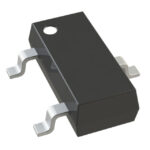 AS431HMBNTR-G1
The activity of extra discounts on wholesale prices is in full swing…
Please fill in your contact information and we will send you the latest wholesale price list.







