 ChipApex | Global Electronic Components Supplier
SEARCH
Search Product
Search Post
— IC芯片 | 连接器 | 传感器 | 被动器件 —
Search productSearch post
— IC芯片 | 连接器 | 传感器 | 被动器件 —
Consult the customer manager about the wholesale price.
consultation hotline:86-132-6715-2157
email:[email protected]
Contact the product manager for consultation. One-stop consultation is available.
Do you want a lower wholesale price? Please send us your inquiry and we will reply immediately.
The AS6C4016A-55ZIN is a 256K x 16 bit low power CMOS SRAM fabricated using advanced 0.18μm full CMOS process technology. It operates within a voltage range of 2.7V to 3.6V and supports an industrial temperature range from -40°C to +85°C. The device features three-state outputs that are TTL compatible, ensuring seamless integration with standard logic families. It offers a low data retention voltage of 1.5V (Min.) for battery backup applications. Available in a 44-TSOP2 package, it provides flexibility for system design while maintaining low standby and operating current consumption.
Verify the specific speed grade suffix against the datasheet, as the part number indicates a 45ns access time rather than 55ns. Confirm the package type matches the required 44-TSOP2 configuration. Ensure the voltage range aligns with the 2.7V to 3.6V specification. Check for RoHS compliance status if environmental regulations apply to your deployment. Validate the industrial temperature rating for your operational environment.
Select this component when a 256K x 16 organization is required with low power consumption characteristics. Consider the 0.18μm CMOS process for improved efficiency compared to older technologies. Evaluate the 44-TSOP2 package for surface-mount assembly requirements. Ensure the 2.7V to 3.6V supply voltage fits your system's power architecture. Verify compatibility with TTL-compatible input/output levels for signal integrity.
This SRAM belongs to the AS6C4016A family, which includes variants like the AS6C4016A-45BIN in a VFBGA-48 package. The family shares the same core specifications but differs in package type and potentially speed grades. The ZIN suffix denotes the 44-TSOP2 package with lead-free, RoHS-compliant construction. This places it within Alliance Memory's low-power CMOS SRAM portfolio designed for industrial applications.
The AS6C4016A-45BIN serves as a pin-compatible alternative in a VFBGA-48 package. Both share the same electrical characteristics and organization. Verify footprint compatibility before substitution. Ensure the replacement variant meets the same industrial temperature and voltage requirements.
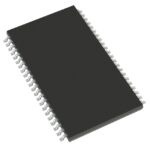 AS6C4016A-55ZIN
The activity of extra discounts on wholesale prices is in full swing…
Please fill in your contact information and we will send you the latest wholesale price list.





