 ChipApex | Global Electronic Components Supplier
SEARCH
Search Product
Search Post
— IC芯片 | 连接器 | 传感器 | 被动器件 —
Search productSearch post
— IC芯片 | 连接器 | 传感器 | 被动器件 —
Consult the customer manager about the wholesale price.
consultation hotline:86-132-6715-2157
email:[email protected]
Contact the product manager for consultation. One-stop consultation is available.
Do you want a lower wholesale price? Please send us your inquiry and we will reply immediately.
The ASNT5010-KMC is a D-Type Flip-Flop manufactured by ADSANTEC, designed for high-speed data retiming applications. It operates with a clock frequency of up to 32 GHz and supports data rates of 32 Gbps. The device features a single element architecture providing 1-bit functionality. It is housed in a 24-CFlatPack (24-CQFP 8x8) surface-mount package. The component exhibits a quiescent current of 125 mA and functions within an operating temperature range of -40°C to 125°C (TJ). This SiGe IC offers broadband data retiming capabilities suitable for demanding electronic environments.
Verify the specific ordering suffix and package variant against official ADSANTEC documentation before procurement. Confirm that the 24-CFlatPack package matches the design requirements. Ensure compatibility with the specified 32 GHz clock frequency and 125 mA current consumption limits. Check for any updated datasheet revisions that may affect pinout or electrical characteristics. Validate supply chain authenticity through authorized channels.
Select this component when broadband data retiming is required at speeds up to 32 Gbps. Consider the 24-lead flat pack footprint for PCB layout constraints. Evaluate the 125 mA quiescent current against power budget limitations. Ensure the -40°C to 125°C operating range meets environmental conditions. Compare with other ADSANTEC flip-flops like the ASNT5010-PQC if lower speed requirements exist.
The ASNT5010-KMC belongs to the ADSANTEC High Speed Logic Family, specifically categorized as a D-Type Flip-Flop. It is part of a series including variants such as the ASNT5010-PQC and ASNT5012. These components are designed for advanced signal integrity and timing applications, leveraging SiGe technology for stability and performance in high-frequency domains.
The ASNT5010-PQC is a documented alternative within the same family, offering 14 Gbps operation. Verify functional equivalence regarding data retiming and interface compatibility before substitution. Ensure package dimensions and pin configurations match the existing design to avoid hardware modifications.
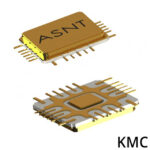 ASNT5010-KMC
The activity of extra discounts on wholesale prices is in full swing…
Please fill in your contact information and we will send you the latest wholesale price list.






