 ChipApex | Global Electronic Components Supplier

SEARCH
Search Product
Search Post
— IC芯片 | 连接器 | 传感器 | 被动器件 —
Search productSearch post
— IC芯片 | 连接器 | 传感器 | 被动器件 —
Consult the customer manager about the wholesale price.
consultation hotline:86-132-6715-2157
email:[email protected]
Contact the product manager for consultation. One-stop consultation is available.
Do you want a lower wholesale price? Please send us your inquiry and we will reply immediately.
AT17LV256-10NC is listed in the Configuration PROMs For FPGAs range at ChipApex. The manufacturer field lists Microchip Technology. Its product description is IC EEPROM FPGA 256KB 8-SOIC. Review the specifications below when checking this part for your BOM.
The AT17LV256-10NC is a 256-Kbit serial EEPROM designed for FPGA configuration. It supports both 3.3V and 5.0V operating voltages and features in-system programmability via a two-wire bus. The device utilizes a simple serial interface to configure SRAM-based FPGAs, supporting cascading read-back for higher-density arrays. It offers low-power standby mode, programmable reset polarity, and high-reliability endurance with data retention specifications suitable for industrial applications.
Verify the specific package type and temperature range required for your application. Confirm compatibility with existing FPGA configuration protocols. Check for any end-of-life notices or recommended replacements if sourcing from secondary markets. Ensure proper handling for electrostatic discharge during installation.
Select this component when a cost-effective, serial configuration memory for SRAM-based FPGAs is needed. Consider the 8-lead SOIC package for space-constrained designs. Evaluate power supply requirements to ensure compatibility with either 3.3V or 5.0V systems. Assess the need for in-system programmability versus pre-programmed devices.
The AT17LV series includes various capacities ranging from 64-Kbit to 4-Mbit. The AT17LV256 specifically provides 256-Kbit storage. It belongs to the family of FPGA configurators designed by Microchip Technology (formerly Atmel). Other packages include LAP, PDIP, PLCC, and TQFP options.
Customers may migrate to the AT17LVXXX-10SU for green package options. Verify pinout compatibility when replacing older variants like -10SC or -10SI.
The CEO pin outputs a Low signal when the address counter reaches its maximum value, enabling cascading of multiple EEPROMs by connecting to the CE input of the next device.
The reset polarity can be programmed as either active High or active Low by writing to four specific EEPROM bytes using an industry-standard programmer.
Explore related parts through Memory, Integrated Circuits (ICs), all product categories, ChipApex homepage.
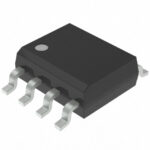 AT17LV256-10NC

The activity of extra discounts on wholesale prices is in full swing…
Please fill in your contact information and we will send you the latest wholesale price list.





