 ChipApex | Global Electronic Components Supplier

SEARCH
Search Product
Search Post
Search productSearch post
Consult the customer manager about the wholesale price.
consultation hotline:86-132-6715-2157
email:[email protected]
Contact the product manager for consultation. One-stop consultation is available.
Do you want a lower wholesale price? Please send us your inquiry and we will reply immediately.
AT24C01C-PUM is listed in the Memory IC range at ChipApex. The manufacturer field lists Microchip Technology. Its product description is IC EEPROM 1KBIT I2C 1MHZ 8DIP. Review the specifications below when checking this part for your BOM.
The AT24C01C-PUM is a 1-Kbit (128 x 8) serial electrically erasable and programmable read-only memory manufactured by Microchip Technology. It features an I²C-compatible two-wire serial interface supporting Standard mode (100 kHz), Fast mode (400 kHz), and Fast Mode Plus (1 MHz). The device operates within a supply voltage range of 1.7V to 5.5V and supports industrial temperature applications from -40°C to +85°C. It includes hardware write protection, self-timed write cycles, and high endurance capabilities.
Verify that the ordering suffix 'PUM' corresponds to the specific package type and tape-and-reel packaging configuration required for your assembly process. Confirm that the component meets RoHS compliance standards and lead-free requirements as specified in the manufacturer's documentation before finalizing procurement orders.
Select this component when a 1-Kbit EEPROM capacity is required alongside I²C connectivity. Ensure the system design accommodates the 1.7V to 5.5V operating voltage range and the industrial temperature specifications. Verify that the host controller supports the desired clock frequency modes, particularly if Fast Mode Plus operation at 1 MHz is intended.
This part belongs to the AT24C01C/AT24C02C series of serial EEPROMs designed for low-voltage and low-power operations. The series offers various package options including SOIC, TSSOP, UDFN, PDIP, SOT23, and VFBGA. It is optimized for environments where space constraints and energy efficiency are critical design factors.
Compatible substitutes include other AT24C01C variants with different package suffixes such as AT24C01C-SHUM or AT24C01C-SSHM, provided the pinout and electrical characteristics remain identical. Cross-reference datasheets to ensure package dimensions and thermal properties match the existing board layout.
When the WP pin is connected directly to VCC, all write operations to the protected memory array are inhibited. Connecting it to GND allows normal write operations.
If not driven, these pins are internally pulled down to GND. However, due to potential capacitive coupling, Microchip recommends connecting them to a known state.
Yes, any two-wire device can be protocol reset by clocking SCL until SDA is released by the EEPROM, typically requiring no more than nine dummy clock cycles.
Explore related parts through Memory, Integrated Circuits (ICs), all product categories, ChipApex homepage.
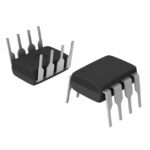 AT24C01C-PUM

The activity of extra discounts on wholesale prices is in full swing…
Please fill in your contact information and we will send you the latest wholesale price list.






