 ChipApex | Global Electronic Components Supplier

SEARCH
Search Product
Search Post
Search productSearch post
Consult the customer manager about the wholesale price.
consultation hotline:86-132-6715-2157
email:[email protected]
Contact the product manager for consultation. One-stop consultation is available.
Do you want a lower wholesale price? Please send us your inquiry and we will reply immediately.
AT27C520-90SC is listed in the Memory IC range at ChipApex. The manufacturer field lists Microchip Technology. Its product description is IC EPROM 512KBIT PARALLEL 20SOIC. Review the specifications below when checking this part for your BOM.
The AT27C520-90SC is a 524,288-bit One-Time Programmable Read Only Memory (OTP EPROM) manufactured by Microchip Technology. It is organized as 64K words by 8 bits and features an 8-bit multiplexed address/output interface to minimize system chip count. The device operates on a single 5V ± 10% supply with a maximum active current of 20 mA at 5 MHz. It offers a fast read access time of 90 ns, eliminating the need for wait states in high-performance microprocessor systems. The component is available in 20-lead SOIC packages and supports both commercial (0°C to 70°C) and industrial (-40°C to 85°C) temperature ranges.
Verify the specific suffix 'SC' corresponds to the 20-lead SOIC package and commercial temperature range during acquisition. Confirm that the source documentation identifies Atmel as the original manufacturer while Microchip Technology is listed as the distributor or successor entity. Ensure the OTP nature of the device is acknowledged, as it cannot be reprogrammed after fabrication. Check for RoHS compliance status if required by your manufacturing standards.
Select this component when a 512 Kbit capacity is required for permanent code storage. The 90 ns speed grade is suitable for systems where slightly slower access times are acceptable compared to the 70 ns variant. Consider the 20-lead SOIC package constraints regarding board space and thermal dissipation. Ensure the design accommodates the 13V programming voltage requirement if field programming is intended.
This part belongs to the AT27C series of OTP EPROMs, designed for applications replacing mask-programmed ROMs. It utilizes scaled CMOS technology to achieve lower power consumption and faster programming speeds than earlier generations. The series is characterized by its compatibility with TTL and CMOS logic levels, facilitating integration into diverse digital systems.
Public confirmed substitute part numbers: AT27C520-70SC, AT27C520-90SI, AT27C520-70SI.
The OE/VPP pin serves dual purposes: it acts as the Output Enable signal during normal read operations and accepts the 13V programming voltage during the Rapid™ programming algorithm.
By using AD0-AD7 pins for both address and data, the device reduces the total pin count from 28 to 20, minimizing the footprint on the printed circuit board and simplifying the routing of the address/data bus.
The typical programming time per byte is 50 microseconds, utilizing the Rapid™ Programming Algorithm which includes verification steps to ensure data integrity.
Explore related parts through Memory, Integrated Circuits (ICs), all product categories, ChipApex homepage.
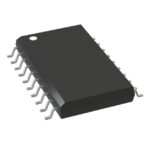 AT27C520-90SC

The activity of extra discounts on wholesale prices is in full swing…
Please fill in your contact information and we will send you the latest wholesale price list.





