 ChipApex | Global Electronic Components Supplier
SEARCH
Search Product
Search Post
— IC芯片 | 连接器 | 传感器 | 被动器件 —
Search productSearch post
— IC芯片 | 连接器 | 传感器 | 被动器件 —
Consult the customer manager about the wholesale price.
consultation hotline:86-132-6715-2157
email:[email protected]
Contact the product manager for consultation. One-stop consultation is available.
Do you want a lower wholesale price? Please send us your inquiry and we will reply immediately.
The AT94K40AL-25BQC is a monolithic Field Programmable System Level Integrated Circuit (FPSLIC) combining an AT40K SRAM-based FPGA with an embedded high-performance RISC AVR microcontroller core. It features 40,000 usable FPGA gates, up to 36 Kbytes of dynamically allocated instruction and data SRAM, and on-chip JTAG ICE support. The device operates at a maximum frequency of 25 MHz within a voltage range of 3.0V to 3.6V. Key architectural elements include distributed FreeRAM, Cache Logic for dynamic reconfiguration, and a hardware multiplier optimized for DSP applications.
Verify the specific suffix '25BQC' against official Microchip/Atmel documentation to confirm package type and temperature grade. Confirm JTAG ICE support availability via date code markings as described in the datasheet. Ensure split power supply layout guidelines are followed during PCB design to support the distinct FPGA and AVR power domains.
Select this component when both high-density programmable logic and embedded control are required in a single package. The AT94K40AL variant provides the highest gate count (40K) in the series. Consider the 25MHz speed grade if system timing requires this specific performance level. Verify compatibility with the ATFS40 configuration memory if external boot loading is planned.
This part belongs to the AT94KAL Series FPSLIC family, which integrates Atmel's AT40K FPGA technology with AVR microcontrollers. The series includes variants with 5K, 10K, and 40K gates. The AT94K40AL represents the top-end density option, offering 2304 FPGA core cells and up to 288 user I/Os. It shares the same architectural foundation as lower-density models but scales resources for complex multimedia and signal processing tasks.
Direct replacements within the same package and pinout include other AT94KAL series devices such as the AT94K10AL or AT94K05AL, though these offer reduced gate counts and SRAM. Cross-family migration to newer Microchip FPGAs or MCUs would require significant schematic and firmware redesign due to architectural differences.
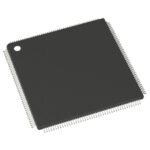 AT94K40AL-25BQC
The activity of extra discounts on wholesale prices is in full swing…
Please fill in your contact information and we will send you the latest wholesale price list.





