 ChipApex | Global Electronic Components Supplier
SEARCH
Search Product
Search Post
— IC芯片 | 连接器 | 传感器 | 被动器件 —
Search productSearch post
— IC芯片 | 连接器 | 传感器 | 被动器件 —
Consult the customer manager about the wholesale price.
consultation hotline:86-132-6715-2157
email:[email protected]
Contact the product manager for consultation. One-stop consultation is available.
Do you want a lower wholesale price? Please send us your inquiry and we will reply immediately.
The AT97SC3204T-X2A17-00 is a Trusted Platform Module (TPM) compliant with TCG TPM version 1.2 and TCG PC Client-specific TPM Interface Specification (TIS) version 1.2. It integrates an Atmel AVR RISC microprocessor, hardware asymmetric crypto engine, and internal EEPROM for RSA keys. The device features a 33MHz Low Pin Count (LPC) interface, supporting SIRQ and CLKRUN for power management. It includes a FIPS 140-2 compliant Random Number Generator and provides 1756 bytes of non-volatile user-defined storage. Operating on a 3.3V supply, it supports commercial (0°C to 70°C) and industrial (-40°C to +85°C) temperature ranges.
Verify the specific ordering suffix against the manufacturer's current catalog to ensure package type and temperature range alignment. Confirm that the complete datasheet requirements are met, as this summary document references additional addenda for full ordering codes. Ensure compatibility with existing BIOS drivers and operating system device software provided by the manufacturer.
Select based on required operating temperature range, choosing between commercial (0°C to 70°C) or industrial (-40°C to +85°C) grades. Determine the appropriate package format, such as the 28-lead thin TSSOP or 40-pad QFN, based on PCB layout constraints. Verify that the system supports the 33MHz LPC interface and utilizes the necessary GPIO-Express-00 pin if external configuration is required.
This component belongs to the AT97SC3204 series of Trusted Platform Modules designed for PC client platforms. It serves as a turnkey security solution integrating firmware and hardware cryptographic accelerators. The series supports standard TCG commands and dynamic internal memory management for multiple RSA keys without system intervention.
Consult the manufacturer's official cross-reference documentation for verified substitute part numbers. Ensure any replacement maintains compliance with TCG TPM v1.2 and TCG PC Client-specific TIS v1.2 specifications. Verify package footprint compatibility and electrical parameter alignment before integration.
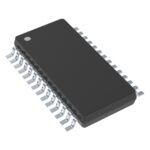 AT97SC3204T-X2A17-00
The activity of extra discounts on wholesale prices is in full swing…
Please fill in your contact information and we will send you the latest wholesale price list.






