 ChipApex | Global Electronic Components Supplier
SEARCH
Search Product
Search Post
— IC芯片 | 连接器 | 传感器 | 被动器件 —
Search productSearch post
— IC芯片 | 连接器 | 传感器 | 被动器件 —
Consult the customer manager about the wholesale price.
consultation hotline:86-132-6715-2157
email:[email protected]
Contact the product manager for consultation. One-stop consultation is available.
Do you want a lower wholesale price? Please send us your inquiry and we will reply immediately.
The ATF1502AS-10AC44 is a high-performance, electrically-erasable Complex Programmable Logic Device (CPLD) from Microchip Technology. It features 32 logic macrocells with up to 36 inputs and 32 bi-directional I/O pins in a 44-lead PLCC package. The device operates at a maximum frequency of 125 MHz with a typical pin-to-pin delay of 10 ns. It utilizes advanced EEPROM technology for complete reprogrammability, supporting In-System Programmability (ISP) via JTAG. Key specifications include 10,000 program/erase cycles, 20-year data retention, and operation within the commercial temperature range of 0°C to +70°C.
Verify the specific suffix AC44 corresponds to the 44-lead PLCC package and commercial temperature grade (-40°C to +85°C absolute max, 0°C to +70°C operating). Confirm that the 'AS' designation indicates standard performance rather than the low-power 'L' variant. Ensure design files account for the specific timing parameters associated with the -10 speed grade.
Select this component when 32 macrocells are sufficient for the design complexity. Choose the AS version over AL if standard power consumption is acceptable and lower cost is prioritized over ultra-low standby current. Verify that the 44-pin PLCC footprint matches the PCB layout constraints. Consider the -10 speed grade if propagation delays around 10 ns meet the system timing requirements.
This part belongs to the ATF1502AS/L family of high-density CPLDs. It shares architectural similarities with other members like the ATF1504AS but offers fewer macrocells (32 vs 64). The device is designed to be drop-in compatible with older PAL/PLD architectures while providing significantly higher density and flexibility through its enhanced routing switch matrices and flexible macrocell structure.
Direct functional replacements within the same package and pinout may include other ATF1502AS variants with different speed grades (e.g., -7, -15, -25). For pin-compatible upgrades with more resources, consider the ATF1504AS series, though verification of pin mapping and capacity is required. Cross-voltage or cross-package replacements require schematic and layout redesign.
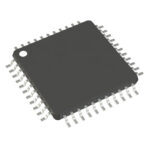 ATF1502AS-10AC44
The activity of extra discounts on wholesale prices is in full swing…
Please fill in your contact information and we will send you the latest wholesale price list.





