 ChipApex | Global Electronic Components Supplier
SEARCH
Search Product
Search Post
— IC芯片 | 连接器 | 传感器 | 被动器件 —
Search productSearch post
— IC芯片 | 连接器 | 传感器 | 被动器件 —
Consult the customer manager about the wholesale price.
consultation hotline:86-132-6715-2157
email:[email protected]
Contact the product manager for consultation. One-stop consultation is available.
Do you want a lower wholesale price? Please send us your inquiry and we will reply immediately.
The ATF16V8B-10JC is a high-performance CMOS electrically-erasable programmable logic device (PLD) utilizing Atmel Flash memory technology. It features 8 macrocells, 18 inputs, and 8 I/Os in a 20-lead PLCC package. The -10 speed grade specifies a maximum pin-to-pin delay of 10 ns and a clock-to-output delay of 7 ns. Operating at 5V ± 5% for commercial temperatures (0°C to 70°C), it supports registered, complex, and simple modes. Key electrical characteristics include 20-year data retention, 100 erase/write cycles, 2,000V ESD protection, and 200 mA latchup immunity.
Verify the ordering suffix 'JC' corresponds to the 20-lead Plastic J-leaded Chip Carrier (PLCC) package and Commercial temperature range (0°C to 70°C). Confirm that the -10 speed grade meets the system timing requirements of 10 ns max pin-to-pin delay. Check for RoHS compliance status as older revisions may contain lead.
Select this part when replacing obsolete 20-pin PALs like the GAL16V8 or Lattice P16V8. Choose the Registered mode if state machines are required, Complex mode for I/O with output enable, or Simple mode for pure combinatorial logic. Ensure the 5V supply tolerance matches the commercial ±5% specification.
This component belongs to the ATF16V8B series, which includes low-power variants ATF16V8BQ and ATF16V8BQL. The standard ATF16V8B offers higher current consumption compared to the Q and QL versions but provides the same logical functionality and Flash-based reprogrammability across all speed grades.
Public confirmed substitutes include ATF16V8B-10PC (PDIP), ATF16V8B-10SC (SOIC), and ATF16V8B-10XC (TSSOP) for different packages. For industrial temperature ranges, consider ATF16V8B-10JI. Low-power alternatives are ATF16V8BQ-10JC and ATF16V8BQL-10JC.
The device supports Registered Mode (for registers and state machines), Complex Mode (for I/O with output enable control), and Simple Mode (for dedicated combinatorial outputs without OE).
Programming the single security fuse inhibits fuse verify and preload functions to prevent unauthorized copying, though the 64-bit User Signature remains accessible.
Internal pull-ups ensure that unused inputs or I/O pins float to VCC, maintaining known logic states and preventing floating inputs when not driven externally.
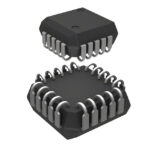 ATF16V8B-10JC
The activity of extra discounts on wholesale prices is in full swing…
Please fill in your contact information and we will send you the latest wholesale price list.





