 ChipApex | Global Electronic Components Supplier
SEARCH
Search Product
Search Post
— IC芯片 | 连接器 | 传感器 | 被动器件 —
Search productSearch post
— IC芯片 | 连接器 | 传感器 | 被动器件 —
Consult the customer manager about the wholesale price.
consultation hotline:86-132-6715-2157
email:[email protected]
Contact the product manager for consultation. One-stop consultation is available.
Do you want a lower wholesale price? Please send us your inquiry and we will reply immediately.
The ATF16V8BQ-10PC is a high-performance CMOS electrically erasable programmable logic device (PLD) manufactured by Microchip Technology. It utilizes Atmel’s Flash memory technology and features eight macrocells with 20 pins in a 20-lead PDIP package. The device operates at a maximum pin-to-pin delay of 10 ns, with a setup time of 7.5 ns and clock-to-output delay of 7 ns. It supports a 5V supply voltage with ±5% tolerance for commercial applications (0°C to 70°C). Standby current is typically 35 mA, while active current reaches 55 mA.
Verify component authenticity through authorized Microchip distributors or certified suppliers. Confirm package integrity and lead condition upon receipt. Ensure programming equipment supports the specific JEDEC file format required for ATF16V8BQ devices. Check for RoHS compliance status as historical batches may vary. Validate temperature range specifications against application requirements before integration.
Select the ATF16V8BQ variant over the standard ATF16V8B when reduced power consumption is critical, as it offers lower standby and active currents. Choose the -10 speed grade for designs requiring a maximum 10 ns propagation delay. Ensure the design accommodates the 5V ±5% supply tolerance required for commercial temperature ranges. Verify that the 20-pin PDIP footprint matches the PCB layout constraints.
This component belongs to the ATF16V8B family of Electrically Erasable Programmable Logic Devices (EEPLDs). The 'Q' suffix denotes a low-power version within this architecture, distinct from the standard ATF16V8B and the ultra-low-power ATF16V8BQL. The '-10' indicates the 10 ns speed grade, while 'PC' specifies the 20-lead Plastic Dual Inline Package suitable for through-hole mounting.
Pin-compatible replacements include other ATF16V8B variants such as ATF16V8B-10PC or ATF16V8B-15PC, though power characteristics will differ. The ATF16V8BQL series offers similar functionality with significantly lower power but slower speeds. Ensure software compilers support the specific macrocell configuration modes required for the target PAL emulation.
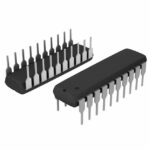 ATF16V8BQ-10PC
The activity of extra discounts on wholesale prices is in full swing…
Please fill in your contact information and we will send you the latest wholesale price list.





