 ChipApex | Global Electronic Components Supplier
SEARCH
Search Product
Search Post
— IC芯片 | 连接器 | 传感器 | 被动器件 —
Search productSearch post
— IC芯片 | 连接器 | 传感器 | 被动器件 —
Consult the customer manager about the wholesale price.
consultation hotline:86-132-6715-2157
email:[email protected]
Contact the product manager for consultation. One-stop consultation is available.
Do you want a lower wholesale price? Please send us your inquiry and we will reply immediately.
The ATF16V8BQ-10SC is a high-performance CMOS electrically erasable programmable logic device (PLD) utilizing Atmel Flash memory technology. It features eight macrocells and operates at a maximum pin-to-pin delay of 10 ns. The device supports a 5V supply with ±5% tolerance for commercial applications (0°C to 70°C). Key electrical characteristics include a standby current of 35 mA typical and an active current of 40 mA typical. It provides 2,000V ESD protection and 200 mA latchup immunity, ensuring high reliability in standard digital logic applications.
Verify that the specific ordering suffix SC corresponds to the 20-lead SOIC package as defined in the official Microchip/Atmel ATF16V8B family datasheet. Confirm the temperature range matches commercial specifications (0°C to 70°C) if industrial operation is required. Ensure programming equipment supports the Flash architecture and security fuse features described in the documentation.
Select the ATF16V8BQ-10SC when system power constraints require lower active current than the standard ATF16V8B-10SC, while maintaining the same 10 ns speed grade. Choose this part over the BQL series if higher drive capability is needed, as the BQL offers lower power but different electrical characteristics. Ensure the design utilizes the 20-lead SOIC footprint and accounts for the specific pinout where Pin 1 is CLK and Pin 11 is OE in registered mode.
This component belongs to the ATF16V8B family, which includes standard (B), low-power (BQ), and ultra-low-power (BQL) variants. All share the same logical architecture and pinouts but differ in power consumption profiles. The 'BQ' designation specifically indicates the intermediate power consumption tier, positioned between the standard B and the low-power BQL versions within the same speed and package options.
Publicly confirmed direct substitutes include other ATF16V8B-10SC parts from the same family with identical speed and package specifications. Cross-referencing with legacy PAL devices like the GAL16V8 requires verifying mode configuration compatibility through software compilers.
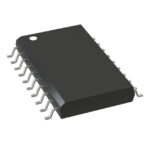 ATF16V8BQ-10SC
The activity of extra discounts on wholesale prices is in full swing…
Please fill in your contact information and we will send you the latest wholesale price list.





