 ChipApex | Global Electronic Components Supplier
SEARCH
Search Product
Search Post
— IC芯片 | 连接器 | 传感器 | 被动器件 —
Search productSearch post
— IC芯片 | 连接器 | 传感器 | 被动器件 —
Consult the customer manager about the wholesale price.
consultation hotline:86-132-6715-2157
email:[email protected]
Contact the product manager for consultation. One-stop consultation is available.
Do you want a lower wholesale price? Please send us your inquiry and we will reply immediately.
The ATF16V8BQL-15SI is a high-performance CMOS electrically erasable programmable logic device (PLD) utilizing Atmel’s Flash memory technology. It features eight macrocells and supports three operational modes: registered, complex, and simple. The -15 speed grade provides a maximum pin-to-pin delay of 15 ns with a setup time of 12 ns. Designed for industrial applications, it operates within a temperature range of -40°C to +85°C at 5V ± 10%. The device offers low standby current (typical 5 mA), 2000V ESD protection, and 200mA latchup immunity.
Verify the ordering suffix 'SI' corresponds to the SOIC package and Industrial temperature rating as defined in the official Microchip/Atmel ordering guide. Confirm RoHS compliance status, as historical data indicates mixed leaded and lead-free variants within this family. Ensure programming hardware supports the specific Flash architecture and security fuse options.
Select the ATF16V8BQL variant over standard B or BQ versions when system power consumption is critical, due to its significantly lower standby current. The -15 speed grade is suitable for designs requiring up to 15 ns delays; faster 7.5 ns or 10 ns grades are available if timing constraints demand higher performance. Ensure the design utilizes the appropriate compiler mode (Registered, Complex, or Simple) to match the required I/O configuration.
This component belongs to the ATF16V8B series, which includes standard (B), low-power (BQ), and ultra-low-power (BQL) variants. The 'S' suffix denotes the 20-lead Plastic Gull-Wing Small Outline (SOIC) package, while 'I' specifies the Industrial temperature operating range. This series serves as a drop-in replacement for legacy GAL and PAL logic devices.
The ATF16V8BQL-15SI can directly replace devices such as the ATF16V8B-15SI, ATF16V8BQ-15SI, and various 20-pin PALs like the GAL16V8 or Lattice P16V8 when configured via software compilers. Verify that the target application does not exceed the 15 ns timing specifications of this specific speed grade.
The device supports Registered Mode (for state machines with clocked outputs), Complex Mode (for combinatorial I/O with output enable control), and Simple Mode (for dedicated combinatorial outputs without OE).
Registers reset to the low state during power-up when VCC crosses the reset voltage threshold (3.8V to 4.5V). This ensures registered outputs start in a known high state, facilitating reliable state machine initialization.
All inputs and I/Os have internal weak pull-up resistors that float undriven pins to VCC, ensuring known logic states. These can be easily overridden by external TTL-compatible drivers.
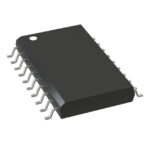 ATF16V8BQL-15SI
The activity of extra discounts on wholesale prices is in full swing…
Please fill in your contact information and we will send you the latest wholesale price list.







